Let's face it, this has been one of the most intriguing offseasons in recent memory. There have been many interesting storylines playing out in front of the backdrop of a worldwide recession. Now, essentially one week from pitchers and catchers reporting to spring training, there are still several significant free agents on the market. Let's take a look at where they are most likely to end up:
Orlando Cabrera
Cabrera is a decent defensive shortstop with some talent at the plate. He is definitely in decline. He is still of some value, but most likely much less than the $7 mil per he had been looking for.
Most likely suitors:
Atlanta Braves
Oakland Athletics
Atlanta could find a way to fit Cabrera in, but it might not be worth dealing Escobar. Oakland would only be in if the price were right.
Best fit:
Oakland
Juan Cruz
Cruz is a very solid reviever. His biggest issue this offseason has not been lack of talent or teams that could use his services, it is his Type A free agent status. While Cruz certainly pitched like a Type A last year, teams are not willing to give up a first round draft pick, who will have a solid chance of surpassing Cruz 3 years down the road, for a solid reliever who might only help for a season or two.
Most likely suitors:
New York Yankees
Detroit Tigers
The Yankees would be a good fit, but have shown limited interest. The fact that the Yankees wouldn't have as much concern about the draft pick seems to link their name to Cabrera's. Very unlikely the Tigers would make this move, due to the draft pick.
Best fit:
Minnesota Twins
Bobby Abreu
Once said to be looking for a 4 year $56 million deal, Abreu is now anxiously seeking a one-year deal in perhaps the $7 million range. Sadly, Abreu may have to come down even farther to gain serious interest.
Most likely suitors:
Atlanta Braves
Chicago White Sox
Los Angeles Dodgers
The Braves are in desperate need of an outfield bat, but after the acquisition of Lowe, Vazquez, etc. it remains to be seen if they have anymore financial flexibility. The White Sox would most likely have to find a suitor for Jermaine Dye before seriously considering Abreu. This seems unlikely since Dye is vastly overpriced relative to the market. The Dodgers' interest seems to be limited to calling Manny's bluff.
Best fit:
Atlanta Braves
Orlando Hudson
Solid talent, with a couple of strong years ahead of him. Some freak injuries seem to hurt his already sagging market.
Most likely suitors:
Washington Nationals
Los Angeles Dodgers
New York Mets
The Nationals seem interested, but are being very patient looking for a bargain. The Dodgers will only sign Hudson if they miss out on Ramirez or there is an even greater drop in price. The Mets could only make a move if Omar Minaya pulled off a miracle and moved Luis Castillo.
Best fit:
Washington Nationals
Adam Dunn
A controversial figure: despised by traditionalists, embraced by statistical analysts. Dunn could make almost any lineup better, he could also make almost any outfield defense worse. The upside is greater than the downside, but he is still struggling to find a real market.
Most likely suitors:
Washington Nationals
Atlanta Braves
The Nationals will make a move if no one else does. They would be ecstatic if both Hudson and Dunn fell into their laps at an affordable price. The Braves could use his bat, but seem very wary of the Ks and the defense.
Best fit:
New York Mets
Manny Ramirez
Unbelievable talent. Future first ballot hall of famer. Great entertainer. Clutch Hitter. Poor financial decision maker.
Most likely suitors:
Los Angeles Dodgers
San Francisco Giants
The baseball world would be collectively shocked if Manny didn't sign with the Dodgers.
Best fit:
New York Mets
06 February, 2009


20 January, 2009
Clock Ticking on Free Agent Outfielders
There are three difference-making outfielders left on the free agent market. Manny Ramirez is far and away the greatest of the three, but of the remaining two, Adam Dunn and Bobby Abreu, who would be the better acquisition? Let's take an in-depth look at these two outfielders.
Let's start off by looking at how each of Bobby Abreu and Adam Dunn stack up in the categories of the five basic tools: hitting for average, hitting for power, running, throwing, and fielding.
Hitting for Average:
Abreu
1998 - .312 in 497 at-bats
1999 - .335, 546 ab
2000 - .316, 576 ab
2001 - .289, 588 ab
2002 - .308, 572 ab
2003 - .300, 577 ab
2004 - .301, 574 ab
2005 - .286, 588 ab
2006 - .297, 548 ab
2007 - .283, 605 ab
2008 - .296, 609 ab

Dunn
2001 - .262 in 244 at-bats
2002 - .249, 535 ab
2003 - .215, 381 ab
2004 - .266, 568 ab
2005 - .247, 543 ab
2006 - .234, 561 ab
2007 - .264, 522 ab
2008 - .236, 517 ab
Abreu is by far the greater hitter for average.
Hitting for Power:
Abreu
1998 - .497 SLG, 17 HR
1999 - .549, 20 HR
2000 - .554, 25 HR
2001 - .543, 31 HR
2002 - .521, 20 HR
2003 - .468, 20 HR
2004 - .544, 30 HR
2005 - .474, 24 HR
2006 - .462, 15 HR
2007 - .445, 16 HR
2008 - .471, 20 HR
Dunn
2001 - .578 SLG, 19 HR
2002 - .454, 26 HR
2003 - .465, 27 HR
2004 - .569, 46 HR
2005 - .540, 40 HR
2006 - .490, 40 HR
2007 - .554, 40 HR
2008 - .513, 40 HR
To emphasize how big of a landslide this is for Dunn let's compare his Isolated Power with Abreu's:
Abreu
1998 - .185
1999 - .214
2000 - .238
2001 - .253
2002 - .213
2003 - .168
2004 - .242
2005 - .189
2006 - .164
2007 - .162
2008 - .176
Dunn
2001- .316
2002 - .206
2003 - .249
2004 - .303
2005 - .293
2006 - .257
2007 - .289
2008 - .277
Abreu's best IsoP season is barely better than Dunn's second worst. There is really no comparison between their power.
Before we leave the subject of hitting there is something that must be addressed when discussing these two players: on-base percentage. Both of the players are phenomenal at drawing walks.
Let's compare the two:
Abreu
1998 - .409 OBP, 14.5 BB%
1999 - .446, 16.6
2000 - .416, 14.8
2001 - .393, 15.3
2002 - .413, 15.4
2003 - .409, 15.9
2004 - .428, 18.1
2005 - .405, 16.6
2006 - .424, 18.5
2007 - .369, 12.2
2008 - .371, 10.7
Dunn
2001 - .371 OBP, 13.5 BB%
2002 - .400, 19.3
2003 - .354, 16.3
2004 - .388, 16.0
2005 - .387, 17.4
2006 - .365, 16.6
2007 - .386, 16.2
2008 - .386, 19.1
Abreu's average has already been accounted for and we know that it is far superior to Dunn's. We include BB% here to illustrate that both players are extremely talented in the art of drawing a walk. Excluding average from the inflation of the OBP these players are roughly even with Adam Dunn having a slight edge in the ability to get on-base aside from hits.
Running:
Abreu
1998 - 19 SB
1999 - 27 SB
2000 - 28 SB
2001 - 36 SB
2002 - 31 SB
2003 - 22 SB
2004 - 40 SB
2005 - 31 SB, -1.8
2006 - 30 SB, 5.3 EqBRR
2007 - 25 SB, 0.1 EqBRR
2008 - 22 SB, -.6 EqBRR
Dunn
2001 - 4 SB
2002 - 19 SB
2003 - 8 SB
2004 - 6 SB
2005 - 4 SB, -2.6 EqBRR
2006 - 7 SB, -0.8 EqBRR
2007 - 9 SB, 1.6 EqBRR
2008 - 2, -2.6 EqBRR
Surprisingly Bobby Abreu doesn't grab a huge lead here. He is certainly a much bigger threat to steal a base, but looking at Baseball Prospectus's Equivalent Base-running Runs Abreu is not a huge factor on the base paths. He had a great year in 2006, but the last couple of seasons have been about average. He is slightly ahead of Dunn, but not by a monumental amount. It is important to note that the EqBRR is a much better way of measuring a baserunner's worth than stolen bases, because in addition to steals and caught stealing EqBRR takes into account running on hits, sacrifices, and being thrown out in similar situations.
Now when it comes to throwing and fielding for these players both are lackluster. Since there is a dearth of fielding statistics we'll view throwing and fielding collectively through the fielding statistic UZR/150. This takes into account both throwing and fielding so it will be useful to us in our current examination. (We have used accounting notation by reflecting negative values in parantheses).
Throwing and Fielding:
Abreu
2002 - 6.7
2003 - 13.4
2004 - (10.4)
2005 - (6.9)
2006 - (14.8)
2007 - (3.9)
2008 - (25.9)
Dunn
2002 - 1.0
2003 - (4.7)
2004 - (6.6)
2005 - (14.7)
2006 - (11.0)
2007 - (16.3)
2008 - (22.6)
We have only included the statistics accumulated in the outfield since we are valuing them as outfielders. As you can see neither player is a particularly talented defensive outfielder. When Abreu was younger he was able to make up for some of his shortcomings with his speed, but now neither player is effective and is in fact quite a detriment.
Let's take a look at the cumulative value of these players over the past 6 seasons. We will look at their season-by-season VORP and their defensive runs allowed/prevented relative to replacement level:
Abreu
2003 - 43.0 VORP, 0 runs prevented
2004 - 73.5, 2
2005 - 47.1, -17
2006 - 49.0, -3
2007 - 27.9, -2
2008 - 33.2, -6
Dunn
2003 - 10.1, -6
2004 - 53.4, -17
2005 - 45.0, -11
2006 - 23.5, -13
2007 - 45.5, -17
2008 - 36.6, -10
Overall, offensively Adam Dunn is a more productive outfielder. Defensively however, as bad as Abreu is, he's not as bad as Adam Dunn. The offensive upside of Adam Dunn is likely to negate the greater negative that his defense provides, making him a slightly better choice than Bobby Abreu.
Another factor that can easily be seen in these statistics is age. Bobby Abreu is certainly on the downhill side of a very nice career. Adam Dunn is still in his prime years. One alarming statistic is Bobby Abreu's decline in walk percentage, one of his greatest assets throughout his career.
Using baseball age (age as of July 1 of the season in question), Bobby Abreu is 35 while Adam Dunn is only 29. This is huge difference when looking at these two players. If contract considerations are equal a team should look to add Adam Dunn before Bobby Abreu. While Abreu may have a couple more serviceable seasons in him, those seasons will almost certainly be less valuable than Adam Dunn's.
So what are these players worth on the market today? CHONE places Abreu's value at $10.6 million for average defense ($4.8 mil for putrid defense and $7.5 mil for poor defense), and Dunn's value at $12.8 million for average defense ($6.6 mil for putrid defense and $9.7 mil for poor defense).
Using CHONE's values at poor defense (being optimistic) and projecting a slight decline for 2010 and 2011:
Abreu is worth 3/$19 mil with even distribution of payments.
Dunn is worth 3/$26.6 mil with even distribution of payments.
Using our own projections we value them at:
Abreu is worth 3/$22.2 mil with even distribution of payments.
Dunn is worth 3/$27.0 mil with even distribution of payments.
Teams in need of outfield offensive help should strongly consider either Abreu or Dunn, but especially Dunn if the market continues to sag for these two professional hitters.
Let's start off by looking at how each of Bobby Abreu and Adam Dunn stack up in the categories of the five basic tools: hitting for average, hitting for power, running, throwing, and fielding.
Hitting for Average:
Abreu
1998 - .312 in 497 at-bats
1999 - .335, 546 ab
2000 - .316, 576 ab
2001 - .289, 588 ab
2002 - .308, 572 ab
2003 - .300, 577 ab
2004 - .301, 574 ab
2005 - .286, 588 ab
2006 - .297, 548 ab
2007 - .283, 605 ab
2008 - .296, 609 ab

Dunn
2001 - .262 in 244 at-bats
2002 - .249, 535 ab
2003 - .215, 381 ab
2004 - .266, 568 ab
2005 - .247, 543 ab
2006 - .234, 561 ab
2007 - .264, 522 ab
2008 - .236, 517 ab
Abreu is by far the greater hitter for average.
Hitting for Power:
Abreu
1998 - .497 SLG, 17 HR
1999 - .549, 20 HR
2000 - .554, 25 HR
2001 - .543, 31 HR
2002 - .521, 20 HR
2003 - .468, 20 HR
2004 - .544, 30 HR
2005 - .474, 24 HR
2006 - .462, 15 HR
2007 - .445, 16 HR
2008 - .471, 20 HR
Dunn
2001 - .578 SLG, 19 HR
2002 - .454, 26 HR
2003 - .465, 27 HR
2004 - .569, 46 HR
2005 - .540, 40 HR
2006 - .490, 40 HR
2007 - .554, 40 HR
2008 - .513, 40 HR
To emphasize how big of a landslide this is for Dunn let's compare his Isolated Power with Abreu's:
Abreu
1998 - .185
1999 - .214

2000 - .238
2001 - .253
2002 - .213
2003 - .168
2004 - .242
2005 - .189
2006 - .164
2007 - .162
2008 - .176
Dunn
2001- .316
2002 - .206
2003 - .249
2004 - .303
2005 - .293
2006 - .257
2007 - .289
2008 - .277
Abreu's best IsoP season is barely better than Dunn's second worst. There is really no comparison between their power.
Before we leave the subject of hitting there is something that must be addressed when discussing these two players: on-base percentage. Both of the players are phenomenal at drawing walks.
Let's compare the two:
Abreu
1998 - .409 OBP, 14.5 BB%
1999 - .446, 16.6
2000 - .416, 14.8
2001 - .393, 15.3
2002 - .413, 15.4
2003 - .409, 15.9
2004 - .428, 18.1
2005 - .405, 16.6
2006 - .424, 18.5
2007 - .369, 12.2
2008 - .371, 10.7
Dunn
2001 - .371 OBP, 13.5 BB%
2002 - .400, 19.3
2003 - .354, 16.3
2004 - .388, 16.0
2005 - .387, 17.4
2006 - .365, 16.6
2007 - .386, 16.2
2008 - .386, 19.1
Abreu's average has already been accounted for and we know that it is far superior to Dunn's. We include BB% here to illustrate that both players are extremely talented in the art of drawing a walk. Excluding average from the inflation of the OBP these players are roughly even with Adam Dunn having a slight edge in the ability to get on-base aside from hits.
Running:
Abreu
1998 - 19 SB
1999 - 27 SB
2000 - 28 SB
2001 - 36 SB
2002 - 31 SB
2003 - 22 SB
2004 - 40 SB
2005 - 31 SB, -1.8
2006 - 30 SB, 5.3 EqBRR
2007 - 25 SB, 0.1 EqBRR
2008 - 22 SB, -.6 EqBRR
Dunn
2001 - 4 SB
2002 - 19 SB
2003 - 8 SB
2004 - 6 SB
2005 - 4 SB, -2.6 EqBRR
2006 - 7 SB, -0.8 EqBRR
2007 - 9 SB, 1.6 EqBRR
2008 - 2, -2.6 EqBRR
Surprisingly Bobby Abreu doesn't grab a huge lead here. He is certainly a much bigger threat to steal a base, but looking at Baseball Prospectus's Equivalent Base-running Runs Abreu is not a huge factor on the base paths. He had a great year in 2006, but the last couple of seasons have been about average. He is slightly ahead of Dunn, but not by a monumental amount. It is important to note that the EqBRR is a much better way of measuring a baserunner's worth than stolen bases, because in addition to steals and caught stealing EqBRR takes into account running on hits, sacrifices, and being thrown out in similar situations.
Now when it comes to throwing and fielding for these players both are lackluster. Since there is a dearth of fielding statistics we'll view throwing and fielding collectively through the fielding statistic UZR/150. This takes into account both throwing and fielding so it will be useful to us in our current examination. (We have used accounting notation by reflecting negative values in parantheses).
Throwing and Fielding:
Abreu
2002 - 6.7
2003 - 13.4
2004 - (10.4)
2005 - (6.9)
2006 - (14.8)
2007 - (3.9)
2008 - (25.9)
Dunn
2002 - 1.0
2003 - (4.7)
2004 - (6.6)
2005 - (14.7)
2006 - (11.0)
2007 - (16.3)
2008 - (22.6)
We have only included the statistics accumulated in the outfield since we are valuing them as outfielders. As you can see neither player is a particularly talented defensive outfielder. When Abreu was younger he was able to make up for some of his shortcomings with his speed, but now neither player is effective and is in fact quite a detriment.
Let's take a look at the cumulative value of these players over the past 6 seasons. We will look at their season-by-season VORP and their defensive runs allowed/prevented relative to replacement level:
Abreu
2003 - 43.0 VORP, 0 runs prevented
2004 - 73.5, 2
2005 - 47.1, -17
2006 - 49.0, -3
2007 - 27.9, -2
2008 - 33.2, -6
Dunn
2003 - 10.1, -6
2004 - 53.4, -17
2005 - 45.0, -11
2006 - 23.5, -13
2007 - 45.5, -17
2008 - 36.6, -10
Overall, offensively Adam Dunn is a more productive outfielder. Defensively however, as bad as Abreu is, he's not as bad as Adam Dunn. The offensive upside of Adam Dunn is likely to negate the greater negative that his defense provides, making him a slightly better choice than Bobby Abreu.
Another factor that can easily be seen in these statistics is age. Bobby Abreu is certainly on the downhill side of a very nice career. Adam Dunn is still in his prime years. One alarming statistic is Bobby Abreu's decline in walk percentage, one of his greatest assets throughout his career.
Using baseball age (age as of July 1 of the season in question), Bobby Abreu is 35 while Adam Dunn is only 29. This is huge difference when looking at these two players. If contract considerations are equal a team should look to add Adam Dunn before Bobby Abreu. While Abreu may have a couple more serviceable seasons in him, those seasons will almost certainly be less valuable than Adam Dunn's.
So what are these players worth on the market today? CHONE places Abreu's value at $10.6 million for average defense ($4.8 mil for putrid defense and $7.5 mil for poor defense), and Dunn's value at $12.8 million for average defense ($6.6 mil for putrid defense and $9.7 mil for poor defense).
Using CHONE's values at poor defense (being optimistic) and projecting a slight decline for 2010 and 2011:
Abreu is worth 3/$19 mil with even distribution of payments.
Dunn is worth 3/$26.6 mil with even distribution of payments.
Using our own projections we value them at:
Abreu is worth 3/$22.2 mil with even distribution of payments.
Dunn is worth 3/$27.0 mil with even distribution of payments.
Teams in need of outfield offensive help should strongly consider either Abreu or Dunn, but especially Dunn if the market continues to sag for these two professional hitters.
17 January, 2009
Effectively Wild
Recently the New York Mets decided to pass on Derek Lowe because they did not want to overpay. Our previous analysis shows that the Braves did indeed overpay and the Mets were wise to turn their attention elsewhere. Now the Mets are said to be strongly pursuing Oliver Perez, and were reported to have offered him 3 years, $30 million.
Looking at what Oliver Perez has done in his career thus far, CHONE projects Perez's value over the next five seasons to be:
2009 - $6.7 mil
2010 - $6.9
2011 - $6.6
2012 - $5.6
2013 - $4.9
Due to projected WAR values of:
2009 - 1.5
2010 - 1.4
2011 - 1.2
2012 - 1.0
2013 - 0.8
Because of Oliver Perez's wildness let's assume that these projections are pessimistic. Let's instead suppose that Perez starts to obtain some of the control that could make him great and he improves his WAR values to:
2009 - 2.3
2010 - 2.3
2011 - 2.1
2012 - 2.0
2013 - 1.8
These are vastly optimistic projections, but with an effectively wild left-hander they are also possible.
This would increase his dollar amounts to:
2009 - $10.12 mil
2010 - $11.13
2011 - $11.18
2012 - $11.71
2013 - $11.60
Now let's suppose that Perez ends up agreeing to a slightly improved deal from the Mets' reported offer. Since Derek Lowe was able to acquire a four year guaranteed deal from the Braves it is safe to assume that a much younger Boras client would seek at least four years. With that in mind suppose that Perez wants a four year deal with a fifth year vesting option. Suppose Perez is offered $40 million over four years with $3 million of that up front as a signing bonus and the remaining $37 million paid out in equal installments over the four years of the deal. Under this optimistic scenario the present value of five years of Oliver Perez's service (using a 6.75% discount rate discussed in the Lowe article) is $47.35 million. In order to match this present value a 90% likely fifth year vesting option would have to be worth $17.58 million. As mentioned, these numbers are wildly optimistic. Only Scott Boras seems to be willing to paint such a rosy picture of his client.
If instead Perez performs right between the sabermetric projections and the optimistic projections, with Wins Above Replacement of:
2009 - 1.9
2010 - 1.9
2011 - 1.7
2012 - 1.5
2013 - 1.3
Perez's dollar value would be:
2009 - $8.36 mil
2010 - $9.20
2011 - $9.05
2012 - $8.78
2013 - $8.37
This would correspond to a contract of 4/$33 with a $3 million signing bonus (as part of the $33 mil) and a fifth year vesting option of $11.85 million.
Let's look at this from the flip side. Assuming that the reported offer of 3/$30 is correct how well would Oliver Perez have to perform to justify this contract? Let's assume that the contract does not include a signing bonus and that it is paid with equal installments over the 3 years.
Perez would have to deliver Wins above replacement of:
2009 - 2.3
2010 - 2.1
2011 - 1.9
This is nearly performing at the most optimistic level which we laid out above. It seems unlikely that Perez will perform at such a level given his background, though possible.
So why would the Mets be reluctant to overpay for Lowe, but eager to overpay for Perez? Perhaps it is just a franchise that is making a patented poor move after making solid moves to start the offseaon. Or perhaps the front office is extremely optimistic in Perez's future. Either way the Mets are not likely to get the performance from Perez that they would have gotten from Derek Lowe, while overpaying at a higher rate for Perez than they would have by just signing Lowe.
Looking at what Oliver Perez has done in his career thus far, CHONE projects Perez's value over the next five seasons to be:
2009 - $6.7 mil
2010 - $6.9

2011 - $6.6
2012 - $5.6
2013 - $4.9
Due to projected WAR values of:
2009 - 1.5
2010 - 1.4
2011 - 1.2
2012 - 1.0
2013 - 0.8
Because of Oliver Perez's wildness let's assume that these projections are pessimistic. Let's instead suppose that Perez starts to obtain some of the control that could make him great and he improves his WAR values to:
2009 - 2.3
2010 - 2.3
2011 - 2.1
2012 - 2.0
2013 - 1.8
These are vastly optimistic projections, but with an effectively wild left-hander they are also possible.
This would increase his dollar amounts to:
2009 - $10.12 mil
2010 - $11.13
2011 - $11.18
2012 - $11.71
2013 - $11.60
Now let's suppose that Perez ends up agreeing to a slightly improved deal from the Mets' reported offer. Since Derek Lowe was able to acquire a four year guaranteed deal from the Braves it is safe to assume that a much younger Boras client would seek at least four years. With that in mind suppose that Perez wants a four year deal with a fifth year vesting option. Suppose Perez is offered $40 million over four years with $3 million of that up front as a signing bonus and the remaining $37 million paid out in equal installments over the four years of the deal. Under this optimistic scenario the present value of five years of Oliver Perez's service (using a 6.75% discount rate discussed in the Lowe article) is $47.35 million. In order to match this present value a 90% likely fifth year vesting option would have to be worth $17.58 million. As mentioned, these numbers are wildly optimistic. Only Scott Boras seems to be willing to paint such a rosy picture of his client.
If instead Perez performs right between the sabermetric projections and the optimistic projections, with Wins Above Replacement of:
2009 - 1.9
2010 - 1.9
2011 - 1.7
2012 - 1.5
2013 - 1.3
Perez's dollar value would be:
2009 - $8.36 mil
2010 - $9.20
2011 - $9.05
2012 - $8.78
2013 - $8.37
This would correspond to a contract of 4/$33 with a $3 million signing bonus (as part of the $33 mil) and a fifth year vesting option of $11.85 million.
Let's look at this from the flip side. Assuming that the reported offer of 3/$30 is correct how well would Oliver Perez have to perform to justify this contract? Let's assume that the contract does not include a signing bonus and that it is paid with equal installments over the 3 years.
Perez would have to deliver Wins above replacement of:
2009 - 2.3
2010 - 2.1
2011 - 1.9
This is nearly performing at the most optimistic level which we laid out above. It seems unlikely that Perez will perform at such a level given his background, though possible.
So why would the Mets be reluctant to overpay for Lowe, but eager to overpay for Perez? Perhaps it is just a franchise that is making a patented poor move after making solid moves to start the offseaon. Or perhaps the front office is extremely optimistic in Perez's future. Either way the Mets are not likely to get the performance from Perez that they would have gotten from Derek Lowe, while overpaying at a higher rate for Perez than they would have by just signing Lowe.
16 January, 2009
Overweight and Out of Work
Andruw Jones has been much maligned over the past year. His play last season for the Dodgers was putrid and his weight has been the target of constant attacks. Once hailed as a young superstar, possibly the best defensive outfielder in the game; Jones has now become the butt of jokes.

Were the early expectation of Jones too great? Was he overrated from the start? Does he deserve recognition as a baseball elite? Recently, Buster Olney wrote a somewhat controversial piece stating that Andruw Jones was a borderline Hall of Famer. The topic alone generated an appalling gasp from half of baseball fandom.
Buster uses an interesting argument to put together a case for Jones as a borderline candidate. His case is simply this: who are his closest comparables and are they at least borderline Hall candidates?
Let's take a look a Baseball Reference's comparables. Through age 31 the most comparable player to Jones is Sammy Sosa. Sosa is at the very least a borderline Hall of Famer. But how much did Sosa accomplish toward that standing after age 31? Sosa hit 223 of his 609 home runs after his age 31 season and 588 of his 1,667 RBI. These are essentially the only stats that really make Sosa's case for the Hall, so let's stop there. If Sosa had ended his career with 386 home runs and 1,079 RBI would he still be considered a borderline Hall of Famer? The answer to that is barely, despite seasons of 66 and 63 home runs. Sosa is viewed by many as a one trick pony. But nevertheless Sosa's numbers through age 31 would compare favorably to those of Roger Maris, an individual judged by many to be a borderline candidate.
Jones' second most comparable through age 31 is Johnny Bench. Jones may have played a very demanding defensive position brilliantly for several seasons, but Bench played the most demanding defensive position better than any player to ever play the game. This makes the comparison almost not worth looking at. Would Bench have gotten into the Hall without the seasons he played after age 31? Most certainly; but even as great as Jones' defense was, no one would make a case that he was anywhere near as valuable as Bench defensively.
His next most comparable player is Ron Santo, the epitome of borderline. Would Santo have been considered borderline if he had not played after age 31? Maybe, but he would certainly have a weaker case than he does now.
There are a few other points that really work against Andruw Jones. His defense slipped over the last two seasons; his calling card could not stay in place while other aspects of his game diminished. He struck out at an enormous rate, and he was never consistent at reaching base. He played in an era where home run totals are cartoonish. And finally his season with the Dodgers was not only bad, it was historically so. He almost single-handedly cost the Dodgers a playoff berth.
Jones will face an uphill battle attempting to return to the game. He will almost certainly be forced into taking a minor league contract and there are few signs that he will ever return to a significant role with a major league club. Some comparisons seem to suggest that Buster is correct in supposing that Jones will get enough ballot support to be considered borderline, but ultimately Andruw will be remembered more for what he allowed to happen to his body. He will be seen as the player who could've lived up to so many Atlanta-TBS comparisons to the great Hank Aaron, but failed to find the desire to do so.

Were the early expectation of Jones too great? Was he overrated from the start? Does he deserve recognition as a baseball elite? Recently, Buster Olney wrote a somewhat controversial piece stating that Andruw Jones was a borderline Hall of Famer. The topic alone generated an appalling gasp from half of baseball fandom.
Buster uses an interesting argument to put together a case for Jones as a borderline candidate. His case is simply this: who are his closest comparables and are they at least borderline Hall candidates?
Let's take a look a Baseball Reference's comparables. Through age 31 the most comparable player to Jones is Sammy Sosa. Sosa is at the very least a borderline Hall of Famer. But how much did Sosa accomplish toward that standing after age 31? Sosa hit 223 of his 609 home runs after his age 31 season and 588 of his 1,667 RBI. These are essentially the only stats that really make Sosa's case for the Hall, so let's stop there. If Sosa had ended his career with 386 home runs and 1,079 RBI would he still be considered a borderline Hall of Famer? The answer to that is barely, despite seasons of 66 and 63 home runs. Sosa is viewed by many as a one trick
 pony. But nevertheless Sosa's numbers through age 31 would compare favorably to those of Roger Maris, an individual judged by many to be a borderline candidate.
Jones' second most comparable through age 31 is Johnny Bench. Jones may have played a very demanding defensive position brilliantly for several seasons, but Bench played the most demanding defensive position better than any player to ever play the game. This makes the comparison almost not worth looking at. Would Bench have gotten into the Hall without the seasons he played after age 31? Most certainly; but even as great as Jones' defense was, no one would make a case that he was anywhere near as valuable as Bench defensively.
His next most comparable player is Ron Santo, the epitome of borderline. Would Santo have been considered borderline if he had not played after age 31? Maybe, but he would certainly have a weaker case than he does now.
There are a few other points that really work against Andruw Jones. His defense slipped over the last two seasons; his calling card could not stay in place while other aspects of his game diminished. He struck out at an enormous rate, and he was never consistent at reaching base. He played in an era where home run totals are cartoonish. And finally his season with the Dodgers was not only bad, it was historically so. He almost single-handedly cost the Dodgers a playoff berth.
Jones will face an uphill battle attempting to return to the game. He will almost certainly be forced into taking a minor league contract and there are few signs that he will ever return to a significant role with a major league club. Some comparisons seem to suggest that Buster is correct in supposing that Jones will get enough ballot support to be considered borderline, but ultimately Andruw will be remembered more for what he allowed to happen to his body. He will be seen as the player who could've lived up to so many Atlanta-TBS comparisons to the great Hank Aaron, but failed to find the desire to do so.
04 January, 2009
From Ace to Albatross?
Ben Sheets is finding himself in a most precarious situation this offseason. He had started to become the face of a franchise, the once in a decade find that a general manager finds solace in. Now Ben Sheets finds himself in the purgatory of the oft-injured. No one doubts his usefulness as the ace of a staff when healthy, but all too often the Milwaukee Brewers found themselves waiting for his return to the disabled list.
Even after a relatively healthy season by Sheets' standards, GMs are reluctant to commit to him even for a short-term deal.
How big of a risk is Sheets?
Let's take a look at Sheets' projected value over the next couple of years. According to CHONE, Sheets will be worth $12.6 million in 2009 and $12.0 million in 2010. This factors in Sheets' injury history by projecting him to pitch 148 and 133 innings in 2009 and 2010 respectively.
Let's suppose that things are even more dire than that. Suppose that there's a 75% chance that Sheets pitches 148 innings next year and a 25% chance that Sheets does not pitch at all. Similarly for 2010 assume there is a 70% chance that Sheets pitches the 133 innings as expected, and a 30% chance that he doesn't pitch at all.
These are very extreme assumptions, especially considering that Sheets is yet to miss an entire season in his major league career. Furthermore, there is strong evidence that Sheets is less of a health risk than A.J. Burnett who just signed a 5 year $82.5 million deal with the Yankees. (This is something we will take a closer look at in another post).
Using a similar 6.75% discount rate as in the Lowe article we find that a 2 year deal for Ben Sheets worth $17.9 million paid out under equal annual amounts is a fair deal. But of course this amount takes into account the worst-case scenarios, i.e. Sheets doesn't pitch at all. Strictly using the dollar amounts above, we have Sheets' value at $24.62 mil over two years (payments distributed evenly). But if Sheets is able to perform at the level he has most of his career his value would be slightly higher, at roughly $26 million.
Now projecting in a best-case/worst-case scenario let's suppose Sheets has a 20% chance of pitching 200+innings, a 25% chance of not pitching at all and a 55% chance of pitching based on the above projections. Sheets' value then becomes $23.79 million. Making a 20% assumption that Sheets pitches 200+ innings is not that far-fetched considering that he has pitched 200+ innings on three occasions in his career and he's coming off of a 198.1 inning season.
It seems that the market for Sheets is currently moving toward roughly 2/$20. That would be quite the bargain based on CHONE's standardized projections.

Even after a relatively healthy season by Sheets' standards, GMs are reluctant to commit to him even for a short-term deal.
How big of a risk is Sheets?

Let's take a look at Sheets' projected value over the next couple of years. According to CHONE, Sheets will be worth $12.6 million in 2009 and $12.0 million in 2010. This factors in Sheets' injury history by projecting him to pitch 148 and 133 innings in 2009 and 2010 respectively.
Let's suppose that things are even more dire than that. Suppose that there's a 75% chance that Sheets pitches 148 innings next year and a 25% chance that Sheets does not pitch at all. Similarly for 2010 assume there is a 70% chance that Sheets pitches the 133 innings as expected, and a 30% chance that he doesn't pitch at all.
These are very extreme assumptions, especially considering that Sheets is yet to miss an entire season in his major league career. Furthermore, there is strong evidence that Sheets is less of a health risk than A.J. Burnett who just signed a 5 year $82.5 million deal with the Yankees. (This is something we will take a closer look at in another post).
Using a similar 6.75% discount rate as in the Lowe article we find that a 2 year deal for Ben Sheets worth $17.9 million paid out under equal annual amounts is a fair deal. But of course this amount takes into account the worst-case scenarios, i.e. Sheets doesn't pitch at all. Strictly using the dollar amounts above, we have Sheets' value at $24.62 mil over two years (payments distributed evenly). But if Sheets is able to perform at the level he has most of his career his value would be slightly higher, at roughly $26 million.
Now projecting in a best-case/worst-case scenario let's suppose Sheets has a 20% chance of pitching 200+innings, a 25% chance of not pitching at all and a 55% chance of pitching based on the above projections. Sheets' value then becomes $23.79 million. Making a 20% assumption that Sheets pitches 200+ innings is not that far-fetched considering that he has pitched 200+ innings on three occasions in his career and he's coming off of a 198.1 inning season.
It seems that the market for Sheets is currently moving toward roughly 2/$20. That would be quite the bargain based on CHONE's standardized projections.

Lowe seeking a contract
We've seen mixed approaches to signing players this offseason. The Mets were able to acquire Francisco Rodriguez at a reasonable amount for a reasonable length of time. The Yankees however bid against themselves for CC Sabathia, blew competition out of the water for Burnett, and stayed with competition for Teixeira. Many players remain on the market and are expected to take lower salaries than was originally anticipated.
Derek Lowe was originally thought to be looking for 5 years $90 million. After seeing a slowing market the Mets made an initial offer of 3/$36. Two very disparate numbers. Scott Boras and Derek Lowe countered by saying Lowe is looking to other suitors for $16 mil per.

Let's use CHONE's projections to formulate the present value of Lowe's worth to a team. We will use a present value formulated from a discount rate based on current bond models. Using a combination of Citigroup's Discount Rate Curve, Moody's Discount Rate, and a portfolio of high rated corporate bonds, a reasonable discount rate is 6.75%. Furthermore, let's assume a middle of year payment for each year of Lowe's valued worth. CHONE projects Lowe's worth at:
2009: $15.5 mil
2010: $14.8
2011: $14.2
2012: $13.4
That gives us a present value of $51.14 mil.
Now, it is important to note that these discount rates do factor in current economic conditions. While we may be tempted to adjust the discount rate going forward, it is really unreasonable to do so given the current economic turbulence.
So now any team wanting to match the value of Lowe's worth, but not wanting to give Lowe 4 years guaranteed could backload some of the dollars of both the guaranteed portion of the contract as well as a fourth year vesting option.
Based on the Mets' three year offer a fourth year vesting option seems highly likely. To make the contract more appealing to Derek Lowe you need to make the vesting condition fairly easy to attain. Something that he has an 85%+ chance of attaining. Perhaps that would be pitching something like 170+ innings in 2011.
Suppose that a team offers Derek Lowe 3/$40, with a payment schedule of 2009 - $12 mil, 2010 - $13, 2011 - $15. In order to match the present value of Lowe's worth, the 85% likely vesting option would have to be $22.18 million; a pretty hefty vesting option.
Now if instead a team makes a more reasonable offer of 3/$42 without backloading; the vesting option would only need to be $19.23 mil. This seems like the type of offer Lowe would be happy with. Either way, he's probably looking for a bit too much in $16 mil per and the Mets started off too low at 3/$36, even given the current economic situation.
Derek Lowe was originally thought to be looking for 5 years $90 million. After seeing a slowing market the Mets made an initial offer of 3/$36. Two very disparate numbers. Scott Boras and Derek Lowe countered by saying Lowe is looking to other suitors for $16 mil per.

Let's use CHONE's projections to formulate the present value of Lowe's worth to a team. We will use a present value formulated from a discount rate based on current bond models. Using a combination of Citigroup's Discount Rate Curve, Moody's Discount Rate, and a portfolio of high rated corporate bonds, a reasonable discount rate is 6.75%. Furthermore, let's assume a middle of year payment for each year of Lowe's valued worth. CHONE projects Lowe's worth at:
2009: $15.5 mil
2010: $14.8
2011: $14.2
2012: $13.4
That gives us a present value of $51.14 mil.
Now, it is important to note that these discount rates do factor in current economic conditions. While we may be tempted to adjust the discount rate going forward, it is really unreasonable to do so given the current economic turbulence.
So now any team wanting to match the value of Lowe's worth, but not wanting to give Lowe 4 years guaranteed could backload some of the dollars of both the guaranteed portion of the contract as well as a fourth year vesting option.
Based on the Mets' three year offer a fourth year vesting option seems highly likely. To make the contract more appealing to Derek Lowe you need to make the vesting condition fairly easy to attain. Something that he has an 85%+ chance of attaining. Perhaps that would be pitching something like 170+ innings in 2011.
Suppose that a team offers Derek Lowe 3/$40, with a payment schedule of 2009 - $12 mil, 2010 - $13, 2011 - $15. In order to match the present value of Lowe's worth, the 85% likely vesting option would have to be $22.18 million; a pretty hefty vesting option.
Now if instead a team makes a more reasonable offer of 3/$42 without backloading; the vesting option would only need to be $19.23 mil. This seems like the type of offer Lowe would be happy with. Either way, he's probably looking for a bit too much in $16 mil per and the Mets started off too low at 3/$36, even given the current economic situation.
31 December, 2008
Salary Cap Musings
There is a cry for fairness resonating from the mouths of many baseball fans, owners, and employees. The cry is hushed when a team such as San Francisco spends an exorbitant sum on second rate talent. But when the almighty Yankees decide to spend unbelievable amounts on decidedly better talent the cries become loud and distinct.
There is no good reason for a salary cap in any sport. Major league baseball works in an extremely proficient manner with regards to player financials. The competitive balance of the league not only exists but is flourishing. For every Kansas City or Pittsburgh you can point to two Tampa Bays and Floridas. Believe it or not but the system governs itself. Even the Yankees have their limits, albeit much higher than any other team. When those limits are met, or their talent needs are met, they no longer spend. Teams such as Oakland and Minnesota are forced to find other ways to compete, but certainly not inferior ways.
The Yankees don't win the World Series every year, not even every other year. Over the past 8 seasons the Yankees have not won the World Series. They have appeared twice. Over those same eight seasons the Yankees have had the largest payroll as well.
The competitive balance is governed in part by how much a team spends, but it is even more directly governed by the aptitude of its management.
Take a look at the breakdown by the market* of teams with World Series' appearances in the past 8 seasons:
Large Market:(8)
Yankees (2)
Red Sox (2)
Tigers
Phillies
Angels
White Sox
Mid Market:(3)
Cardinals (2)
Giants
Small Market:(5)
Rockies
Rays
Diamondbacks
Marlins
Astros
*By "market" we are pointing to how much a team spends, rather than the size of the actual market they appeal to. A more appropriate base given the discussion. So whereas Miami is a fairly large market, the Marlins are decidedly a small spender. Similarly, Detroit is not a large market per se, but the Tigers had a fairly large payroll in 2006.
This is actually quite an even distribution. An argument could be made to move some of the "large" market teams to the mid-market based on their respective payrolls of the seasons in question.
Furthermore, the presence of a salary cap is one the major marketing tools for potential future talent. When a young man is determining whether to spend his time developing his athletic ability, money will most certainly be a factor as it ought to be. With the ease by which basketball talent can be fostered and the readily available structure of football programs this is an increasingly important concern for baseball scouts and fans alike.
A salary cap not only changes the market, it changes the nature of the business. While you might be sour that the Yankees gobbled up 3 of the 4 top free agents avaialable this year, it is that same system that may provide your team with talent such as Hanley Ramirez for a star that might not be able to be used to win in the immediate future.
For further reading please go to Beyond the Box Score:
http://www.beyondtheboxscore.com/2008/12/29/704629/a-short-diatribe-on-salary
There is no good reason for a salary cap in any sport. Major league baseball works in an extremely proficient manner with regards to player financials. The competitive balance of the league not only exists but is flourishing. For every Kansas City or Pittsburgh you can point to two Tampa Bays and Floridas. Believe it or not but the system governs itself. Even the Yankees have their limits, albeit much higher than any other team. When those limits are met, or their talent needs are met, they no longer spend. Teams such as Oakland and Minnesota are forced to find other ways to compete, but certainly not inferior ways.
The Yankees don't win the World Series every year, not even every other year. Over the past 8 seasons the Yankees have not won the World Series. They have appeared twice. Over those same eight seasons the Yankees have had the largest payroll as well.
The competitive balance is governed in part by how much a team spends, but it is even more directly governed by the aptitude of its management.
Take a look at the breakdown by the market* of teams with World Series' appearances in the past 8 seasons:
Large Market:(8)
Yankees (2)
Red Sox (2)
Tigers
Phillies
Angels
White Sox
Mid Market:(3)
Cardinals (2)
Giants
Small Market:(5)
Rockies
Rays
Diamondbacks
Marlins
Astros
*By "market" we are pointing to how much a team spends, rather than the size of the actual market they appeal to. A more appropriate base given the discussion. So whereas Miami is a fairly large market, the Marlins are decidedly a small spender. Similarly, Detroit is not a large market per se, but the Tigers had a fairly large payroll in 2006.
This is actually quite an even distribution. An argument could be made to move some of the "large" market teams to the mid-market based on their respective payrolls of the seasons in question.
Furthermore, the presence of a salary cap is one the major marketing tools for potential future talent. When a young man is determining whether to spend his time developing his athletic ability, money will most certainly be a factor as it ought to be. With the ease by which basketball talent can be fostered and the readily available structure of football programs this is an increasingly important concern for baseball scouts and fans alike.
A salary cap not only changes the market, it changes the nature of the business. While you might be sour that the Yankees gobbled up 3 of the 4 top free agents avaialable this year, it is that same system that may provide your team with talent such as Hanley Ramirez for a star that might not be able to be used to win in the immediate future.
For further reading please go to Beyond the Box Score:
http://www.beyondtheboxscore.com/2008/12/29/704629/a-short-diatribe-on-salary
30 November, 2008
Remarkable Win Totals
In major league history there have been 6 occasions when a pitcher started 15 or more games and won at least as many games as they had started. Quite a remarkable feat. 


Player -------------- Year -- GS -- Wins
Walter Johnson ------ 1913 --- 36 --- 36
Chief Bender --------- 1913 --- 21 --- 21
Lefty Grove ---------- 1931 --- 30 --- 31
Sal Maglie ------------ 1950 --- 16 --- 18
Bob Grim ------------ 1954 --- 20 --- 20
Tom Gordon --------- 1989 --- 16 --- 17
The three who made more than 20 starts are among the greatest pitchers of all-time. Walter Johnson's 1913 season and Lefty Grove's 1931 season rank among the 20 greatest single seasons in major league history.

21 September, 2008
Historic Rewind: 40/40 Seasons

40/40 seasons are fairly well documented. The first 40/40 season was accomplished by Jose Canseco in 1988, Barry Bonds followed in 1996, Alex Rodriguez in 1998, and Alfonso Soriano in 2006. Following is a comparison of each of these seasons, and a list of those who just missed the feat.
Canseco: 42 HR, 40 SB, 120 R, 187 H, 34 2B, 0 3B, 124 RBI, 78 BB, .307/.391/.569, MVP, AL Ch
Bonds: 42 HR, 40 SB, 122 R, 159 H, 27 2B, 3 3B, 129 RBI, 151 BB, .308/.461/.615
Rodriguez: 42 HR, 46 SB, 123 R, 213 H, 35 2B, 5 3B, 124 RBI, 45 BB, .310/.360/.560
Soriano: 46 HR, 41 SB, 119 R, 179 H, 41 2B, 2 3B, 95 RBI, 67 BB, .277/.351/.560
Here are some near misses that still rank among the most extraordinary seasons of all-time:
Bobby Bonds (1973): 39 HR, 43 SB, 131 R, 182 H, 34 2B, 4 3B, 96 RBI, 87 BB, .283/.370/.530
Alfonso Soriano (2002): 39 HR, 41 SB, 128 R, 209 H, 51 2B, 2 3B, 102 RBI, 23 BB, .300/.332/.547
Vladimir Guerrero (2002): 39 HR, 40 SB, 106 R, 206 H, 37 2B, 2 3B, 111 RBI, 84 BB, .336/.417/.593
Carlos Beltran (2004): 38 HR, 42 SB, 121 R, 160 H, 36 2B, 9 3B, 104 RBI, 92 BB, .267/.367/.548

As you can see, these four near misses rank among the elite individual seasons of all-time as well. Remarkably, among the eight seasons listed, only Jose Canseco garnered an MVP award. Barry Bonds season stands out as the greatest all-around feat with a breath-taking 1.076 OPS. Both of Soriano's seasons include remarkable amounts of doubles along with the home run counts, picking up 41 doubles in his 40/40 season and 51 (!) doubles in his near miss. Some oddities among these seasons include Rodriguez and Soriano's low walk totals. In 1998 A-Rod only walked 45 times, and in 2002, in his near miss season, Soriano walked a meager 23 times.
In the three playoff appearances among these seasons, Jose Canseco performed extremely well in the ALCS, but struggled in the Fall Classic. Canseco put up 3 homers in 4 games against the Red Sox, batting .313/.353/.938 with 1 steal in 2 attempts. In the World Series he hit only 1 home run, completed his only steal attempt and batted .053/.182/.211. Alfonso Soriano in his near miss season, didn't have many playoff games to utilize his skills. He hit 1 home run and converted his only steal attempt in 4 games against the Angels, while batting .118/.211/.353. Carlos Beltran had an extra round of playoffs to work with and took full advantage. Beltran hit 4 homers in 5 games against the Braves, converted both of his steal attempts, and batted .455/.500/1.091. In the NLCS, Beltran's bat was still hot. He hit 4 home runs in 7 games against the Cardinals, converted all 4 of his steal attempts, and batted .417/.563/.958.
.JPG)
Historic Rewind: The Bambino, Double X, and Hack
Through the steroids' era and the modern era of band boxes, many of the all-time great statistical seasons have fallen, dwarfed by cartoonish numbers. But a few of the truly outstanding historic seasons still stand out as unattainable, even by steroids' era measurements.


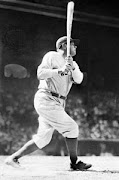
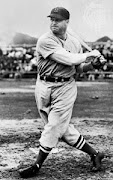
Only three players in the history of baseball have reached 100+ runs scored, 200+ hits, 50+ HRs, and 100+ BBs. The first to accomplish the feat was Babe Ruth in 1921 with 177 runs, 204 hits, 59 homers, and 145 walks. Quite possibly the greatest offensive season in the history of the game. The others to accomplish the feat were Hack Wilson in his record breaking 1930 season and Jimmie Foxx in 1932. Wilson accumulated 146 runs, 208 hits, 56 home runs, and 105 walks. Foxx put up 151 runs, 213 hits, 58 homers, and 116 bases on balls.
While those of the steroids' era tracked down many of the great records, these seasons still stand alone as unique and astounding feats.


Only three players in the history of baseball have reached 100+ runs scored, 200+ hits, 50+ HRs, and 100+ BBs. The first to accomplish the feat was Babe Ruth in 1921 with 177 runs, 204 hits, 59 homers, and 145 walks. Quite possibly the greatest offensive season in the history of the game. The others to accomplish the feat were Hack Wilson in his record breaking 1930 season and Jimmie Foxx in 1932. Wilson accumulated 146 runs, 208 hits, 56 home runs, and 105 walks. Foxx put up 151 runs, 213 hits, 58 homers, and 116 bases on balls.
While those of the steroids' era tracked down many of the great records, these seasons still stand alone as unique and astounding feats.
Historic Rewind: David Wright
A lot of attention was given to the season that David Wright had in 2007, and rightly so. The Mets' September collapse cost Wright the MVP award and tarnished one of the truly great seasons in baseball history.

Only four players in the history of Major League Baseball have had the combination of numbers that Wright accumulated in 2007: 40+ 2Bs, 30+ HRs, 30+ SBs, .300+ BA, .400+ OBP. The first to accomplish the feat was Ellis Burks in 1996 playing in the thin air of Colorado. Burks put together 45 doubles, 40 homers, 32 steals, a .344 average, and .408 OBP. The very next season a fellow Rocky took advantage of the rare air, with Larry Walker racking up 46 doubles, 49 homers, 33 steals, a .366 batting average, and a .452 on-base percentage. In 2004, Bobby Abreu cashed in on the limited dimensions of Citizens Bank Park totaling 47 doubles, 30 homers, 40 steals, a .301 average, and a .428 OBP.
Wright became the first player to accomplish the feat while playing his home games in a pitcher's park. Wright put together 42 doubles, 30 home runs, 34 steals, a .325 average, and a .416 OBP.
Wright stands as the only player of these four to continue to play and put up similar numbers. It remains to be seen if Wright can become the only player to ever accomplish the feat twice in his career, when the Mets move to Citi Field in 2009.

Only four players in the history of Major League Baseball have had the combination of numbers that Wright accumulated in 2007: 40+ 2Bs, 30+ HRs, 30+ SBs, .300+ BA, .400+ OBP. The first to accomplish the feat was Ellis Burks in 1996 playing in the thin air of Colorado. Burks put together 45 doubles, 40 homers, 32 steals, a .344 average, and .408 OBP. The very next season a fellow Rocky took advantage of the rare air, with Larry Walker racking up 46 doubles, 49 homers, 33 steals, a .366 batting average, and a .452 on-base percentage. In 2004, Bobby Abreu cashed in on the limited dimensions of Citizens Bank Park totaling 47 doubles, 30 homers, 40 steals, a .301 average, and a .428 OBP.
Wright became the first player to accomplish the feat while playing his home games in a pitcher's park. Wright put together 42 doubles, 30 home runs, 34 steals, a .325 average, and a .416 OBP.
Wright stands as the only player of these four to continue to play and put up similar numbers. It remains to be seen if Wright can become the only player to ever accomplish the feat twice in his career, when the Mets move to Citi Field in 2009.
19 September, 2008
Historic Season
Quietly, Jose Reyes is having a spectacular season. At no time in the history of major league baseball has a player had a season in which he accumulated at least 100 runs scored, 200 hits, 35 doubles, 15 triples, 15 home runs, and 50 stolen bases; but Reyes is about to do just that. At the time that this article is being written Reyes has: 104 runs, 195 hits, 35 doubles, 18 triples, 16 home runs, and 52 stolen bases. Reyes only needs 5 more hits in the Mets' final 9+ games to become the first player to have such a dynamic combination of statistics in a single season.
 __________
Furthermore, if we remove the restriction on doubles and triples; Reyes will become only the fourth player (along with Lou Brock, 1967; Craig Biggio, 1998; and Hanley Ramirez, 2007) to have 100 runs, 200 hits, 15 home runs, and 50 stolen bases in a season.
If you consider players with 100 runs scored, 15 triples, 15 homers, and 50 homers; Reyes becomes the first player to accomplish this feat twice (2006), while only two others have ever produced similar seasons (Harry Stovey, 1891; and Juan Samuel, 1984).
While Reyes may not win the MVP award, due to writers' fascination with RBI, he is certainly worthy of serious consideration; and may very well be more valuable than the ultimate winner of the award.
 __________
Furthermore, if we remove the restriction on doubles and triples; Reyes will become only the fourth player (along with Lou Brock, 1967; Craig Biggio, 1998; and Hanley Ramirez, 2007) to have 100 runs, 200 hits, 15 home runs, and 50 stolen bases in a season.
If you consider players with 100 runs scored, 15 triples, 15 homers, and 50 homers; Reyes becomes the first player to accomplish this feat twice (2006), while only two others have ever produced similar seasons (Harry Stovey, 1891; and Juan Samuel, 1984).
While Reyes may not win the MVP award, due to writers' fascination with RBI, he is certainly worthy of serious consideration; and may very well be more valuable than the ultimate winner of the award.
31 August, 2008
RDB's MLB Rankings: 25 Aug - 31 Aug
Well here it is, the ultimate in MLB rankings by the numbers. We have developed a formula based upon standing, runs scored, runs allowed, and recent performance along with a very small input from ESPN's and CBS's rankings to determine the rankings of all MLB teams as of this point in the season. This week's rankings do not include commentary but we hope to include the insights that have been available to you in the past in future RDB rankings. Thanks for coming and enjoy the ultimate MLB rankings available!
1 Chicago Cubs W-L: 85 52 ExpW-L: 86 51 L10: 7 3 ESPN: 1 CBS: 1
2 Tampa Bay Rays W-L: 84 51 ExpW-L: 78 57 L10: 7 3 ESPN: 2 CBS: 2
3 Milwaukee Brewers W-L: 80 56 ExpW-L: 77 59 L10: 8 2 ESPN: 3 CBS: 4
4 Los Angeles Angels W-L: 83 52 ExpW-L: 74 61 L10: 6 4 ESPN: 7 CBS: 3
5 Chicago White Sox W-L: 77 59 ExpW-L: 77 59 L10: 5 5 ESPN: 4 CBS: 5
6 Boston Red Sox W-L: 79 57 ExpW-L: 81 55 L10: 6 4 ESPN: 5 CBS: 7
7 Minnesota Twins W-L: 76 60 ExpW-L: 75 61 L10: 4 6 ESPN: 10 CBS: 6
8 New York Mets W-L: 76 61 ExpW-L: 76 61 L10: 6 4 ESPN: 8 CBS: 9
9 Philadelphia Phillies W-L: 75 62 ExpW-L: 78 59 L10: 7 3 ESPN: 6 CBS: 10
10 St. Louis Cardinals W-L: 74 63 ExpW-L: 73 64 L10: 4 6 ESPN: 9 CBS: 8
11 New York Yankees W-L: 72 64 ExpW-L: 71 65 L10: 5 5 ESPN: 11 CBS: 12
12 Toronto Blue Jays W-L: 70 66 ExpW-L: 76 60 L10: 5 5 ESPN: 13 CBS: 11
13 Arizona Diamondbacks W-L: 69 66 ExpW-L: 71 64 L10: 4 6 ESPN: 14 CBS: 13
14 Cleveland Indians W-L: 65 70 ExpW-L: 70 65 L10: 7 3 ESPN: 12 CBS: 17
15 Houston Astros W-L: 71 66 ExpW-L: 65 72 L10: 7 3 ESPN: 15 CBS: 16
16 Florida Marlins W-L: 69 68 ExpW-L: 65 72 L10: 4 6 ESPN: 16 CBS: 15
17 Colorado Rockies W-L: 64 73 ExpW-L: 63 74 L10: 6 4 ESPN: 18 CBS: 18
18 Detroit Tigers W-L: 66 70 ExpW-L: 68 68 L10: 4 6 ESPN: 17 CBS: 19
19 Los Angeles Dodgers W-L: 66 70 ExpW-L: 68 68 L10: 2 8 ESPN: 23 CBS: 14
20 Texas Rangers W-L: 66 71 ExpW-L: 63 74 L10: 4 6 ESPN: 19 CBS: 21
21 Baltimore Orioles W-L: 63 73 ExpW-L: 66 70 L10: 2 8 ESPN: 22 CBS: 20
22 San Francisco Giants W-L: 59 77 ExpW-L: 56 80 L10: 5 5 ESPN: 20 CBS: 22
23 Oakland Athletics W-L: 63 73 ExpW-L: 65 71 L10: 6 4 ESPN: 21 CBS: 23
24 Atlanta Braves W-L: 59 78 ExpW-L: 65 72 L10: 3 7 ESPN: 24 CBS: 25
25 Cincinnati Reds W-L: 61 76 ExpW-L: 59 78 L10: 5 5 ESPN: 25 CBS: 26
26 Washington Nationals W-L: 52 85 ExpW-L: 53 84 L10: 8 2 ESPN: 27 CBS: 30
27 Seattle Mariners W-L: 53 83 ExpW-L: 57 79 L10: 7 3 ESPN: 26 CBS: 28
28 Kansas City Royals W-L: 57 79 ExpW-L: 55 81 L10: 2 8 ESPN: 30 CBS: 24
29 Pittsburgh Pirates W-L: 57 79 ExpW-L: 56 80 L10: 0 10 ESPN: 28 CBS: 27
30 San Diego Padres W-L: 52 83 ExpW-L: 56 79 L10: 4 6 ESPN: 29 CBS: 29
1 Chicago Cubs W-L: 85 52 ExpW-L: 86 51 L10: 7 3 ESPN: 1 CBS: 1
2 Tampa Bay Rays W-L: 84 51 ExpW-L: 78 57 L10: 7 3 ESPN: 2 CBS: 2
3 Milwaukee Brewers W-L: 80 56 ExpW-L: 77 59 L10: 8 2 ESPN: 3 CBS: 4
4 Los Angeles Angels W-L: 83 52 ExpW-L: 74 61 L10: 6 4 ESPN: 7 CBS: 3
5 Chicago White Sox W-L: 77 59 ExpW-L: 77 59 L10: 5 5 ESPN: 4 CBS: 5
6 Boston Red Sox W-L: 79 57 ExpW-L: 81 55 L10: 6 4 ESPN: 5 CBS: 7
7 Minnesota Twins W-L: 76 60 ExpW-L: 75 61 L10: 4 6 ESPN: 10 CBS: 6
8 New York Mets W-L: 76 61 ExpW-L: 76 61 L10: 6 4 ESPN: 8 CBS: 9
9 Philadelphia Phillies W-L: 75 62 ExpW-L: 78 59 L10: 7 3 ESPN: 6 CBS: 10
10 St. Louis Cardinals W-L: 74 63 ExpW-L: 73 64 L10: 4 6 ESPN: 9 CBS: 8
11 New York Yankees W-L: 72 64 ExpW-L: 71 65 L10: 5 5 ESPN: 11 CBS: 12
12 Toronto Blue Jays W-L: 70 66 ExpW-L: 76 60 L10: 5 5 ESPN: 13 CBS: 11
13 Arizona Diamondbacks W-L: 69 66 ExpW-L: 71 64 L10: 4 6 ESPN: 14 CBS: 13
14 Cleveland Indians W-L: 65 70 ExpW-L: 70 65 L10: 7 3 ESPN: 12 CBS: 17
15 Houston Astros W-L: 71 66 ExpW-L: 65 72 L10: 7 3 ESPN: 15 CBS: 16
16 Florida Marlins W-L: 69 68 ExpW-L: 65 72 L10: 4 6 ESPN: 16 CBS: 15
17 Colorado Rockies W-L: 64 73 ExpW-L: 63 74 L10: 6 4 ESPN: 18 CBS: 18
18 Detroit Tigers W-L: 66 70 ExpW-L: 68 68 L10: 4 6 ESPN: 17 CBS: 19
19 Los Angeles Dodgers W-L: 66 70 ExpW-L: 68 68 L10: 2 8 ESPN: 23 CBS: 14
20 Texas Rangers W-L: 66 71 ExpW-L: 63 74 L10: 4 6 ESPN: 19 CBS: 21
21 Baltimore Orioles W-L: 63 73 ExpW-L: 66 70 L10: 2 8 ESPN: 22 CBS: 20
22 San Francisco Giants W-L: 59 77 ExpW-L: 56 80 L10: 5 5 ESPN: 20 CBS: 22
23 Oakland Athletics W-L: 63 73 ExpW-L: 65 71 L10: 6 4 ESPN: 21 CBS: 23
24 Atlanta Braves W-L: 59 78 ExpW-L: 65 72 L10: 3 7 ESPN: 24 CBS: 25
25 Cincinnati Reds W-L: 61 76 ExpW-L: 59 78 L10: 5 5 ESPN: 25 CBS: 26
26 Washington Nationals W-L: 52 85 ExpW-L: 53 84 L10: 8 2 ESPN: 27 CBS: 30
27 Seattle Mariners W-L: 53 83 ExpW-L: 57 79 L10: 7 3 ESPN: 26 CBS: 28
28 Kansas City Royals W-L: 57 79 ExpW-L: 55 81 L10: 2 8 ESPN: 30 CBS: 24
29 Pittsburgh Pirates W-L: 57 79 ExpW-L: 56 80 L10: 0 10 ESPN: 28 CBS: 27
30 San Diego Padres W-L: 52 83 ExpW-L: 56 79 L10: 4 6 ESPN: 29 CBS: 29
03 August, 2008
RDB's MLB Rankings: 28 July - 3 Aug
The dog days are here and it's really showing for a few teams. The Braves and Tigers are done, the Mets have fallen back on hard times again. The Dodgers have geared up for the race, and those pesky Rays are hanging right in there.
1- Los Angeles Angels of Anaheim W-L: 69-42 ExpW-L: 60-51
Now the most complete team in baseball.
2- Boston Red Sox W-L: 64-48 ExpW-L: 66-46
The drop off from Manny to Bay is not nearly what most people are making it.
3- Chicago Cubs W-L: 67-45 ExpW-L: 69-43
Avoiding curses, there's nothing that can stop this team from winning the NL pennant.
4- Tampa Bay Rays W-L: 66-44 ExpW-L: 60-50
Youthful zeal and a veteran-like confidence will keep the Rays in it to the end.
5- Minnesota Twins W-L: 62-49 ExpW-L: 59-52
The cavalry is coming in the form of one of the most talented young arms in recent memory.
6- Chicago White Sox W-L: 61-49 ExpW-L: 61-49
Griffey may not be the right answer, but the White Sox will be right there all season long.
7- Milwaukee Brewers W-L: 62-50 ExpW-L: 58-54
May not win the division, but will be a very scary potential wild card.
8- Philadelphia Phillies W-L: 60-50 ExpW-L: 62-48
In the driver's seat, this time they should stay there.
9- New York Yankees W-L: 61-50 ExpW-L: 61-50
They have all the right parts, now they just need to get hot; again.
10- Florida Marlins W-L: 59-53 ExpW-L: 54-58
Still need some pitching, but the young bats are more than formidable.
11- St. Louis Cardinals W-L: 62-51 ExpW-L: 59-54
In the wrong division, but still one of the best in the NL.
12- Los Angeles Dodgers W-L: 55-55 ExpW-L: 57-53
They have finally got enough hitting to make some noise.
13- Arizona Diamondbacks W-L: 57-53 ExpW-L: 58-52
No deadline move may cost them, but the young talent is starting to hit a little better.
14- New York Mets W-L: 58-53 ExpW-L: 59-52
Minaya making all top prospects off-limit, may cost the Mets a chance in their division.
15- Colorado Rockies W-L: 51-62 ExpW-L: 51-62
The Rockies think they're hanging around in an awful division, but should have moved expendable parts.
16- Toronto Blue Jays W-L: 55-55 ExpW-L: 59-51
Could be competitive next year, but will be an uphill battle in baseball's best division.
17- Baltimore Orioles W-L: 53-56 ExpW-L: 53-56
When will the O's be able to use some of their young talent in a race?
18- Texas Rangers W-L: 57-54 ExpW-L: 53-58
It looks like it will be at least a two year plan.
19- Houston Astros W-L: 53-57 ExpW-L: 50-60
Keeping all of their pieces will only serve to set this team back even longer.
20- Detroit Tigers W-L: 55-55 ExpW-L: 57-53
What changes will the Tigers make this offseason to compete next year?
21- Kansas City Royals W-L: 52-60 ExpW-L: 50-62
Still a couple of years away from making any real noise.
22- Oakland Athletics W-L: 53-57 ExpW-L: 58-52
Next year will be interesting, but 2010 should be their chance.
23- Cleveland Indians W-L: 48-62 ExpW-L: 55-55
This team has made all of the right moves to prepare for long-term competitiveness.
24- Pittsburgh Pirates W-L: 51-60 ExpW-L: 49-62
2010 will be their first chance to play with the big boys in a long time.
25- Cincinnati Reds W-L: 51-61 ExpW-L: 49-63
Not that far away. Made the right move in shipping Griffey out of town, but should have moved Dunn as well.
26- Atlanta Braves W-L: 51-60 ExpW-L: 57-54
Will Kotchman be the long-term answer at first?
27- San Francisco Giants W-L: 46-63 ExpW-L: 46-63
Why keep Molina at this point?
28- San Diego Padres W-L: 42-69 ExpW-L: 44-67
Should be able to pull some things together for next year.
29- Seattle Mariners W-L: 41-69 ExpW-L: 47-63
Could be a long way from being competitive.
30- Washington Nationals W-L: 41-70 ExpW-L: 43-68
When will this team be able to pull together a pool of talent.
1- Los Angeles Angels of Anaheim W-L: 69-42 ExpW-L: 60-51
Now the most complete team in baseball.
2- Boston Red Sox W-L: 64-48 ExpW-L: 66-46
The drop off from Manny to Bay is not nearly what most people are making it.
3- Chicago Cubs W-L: 67-45 ExpW-L: 69-43
Avoiding curses, there's nothing that can stop this team from winning the NL pennant.
4- Tampa Bay Rays W-L: 66-44 ExpW-L: 60-50
Youthful zeal and a veteran-like confidence will keep the Rays in it to the end.
5- Minnesota Twins W-L: 62-49 ExpW-L: 59-52
The cavalry is coming in the form of one of the most talented young arms in recent memory.
6- Chicago White Sox W-L: 61-49 ExpW-L: 61-49
Griffey may not be the right answer, but the White Sox will be right there all season long.
7- Milwaukee Brewers W-L: 62-50 ExpW-L: 58-54
May not win the division, but will be a very scary potential wild card.
8- Philadelphia Phillies W-L: 60-50 ExpW-L: 62-48
In the driver's seat, this time they should stay there.
9- New York Yankees W-L: 61-50 ExpW-L: 61-50
They have all the right parts, now they just need to get hot; again.
10- Florida Marlins W-L: 59-53 ExpW-L: 54-58
Still need some pitching, but the young bats are more than formidable.
11- St. Louis Cardinals W-L: 62-51 ExpW-L: 59-54
In the wrong division, but still one of the best in the NL.
12- Los Angeles Dodgers W-L: 55-55 ExpW-L: 57-53
They have finally got enough hitting to make some noise.
13- Arizona Diamondbacks W-L: 57-53 ExpW-L: 58-52
No deadline move may cost them, but the young talent is starting to hit a little better.
14- New York Mets W-L: 58-53 ExpW-L: 59-52
Minaya making all top prospects off-limit, may cost the Mets a chance in their division.
15- Colorado Rockies W-L: 51-62 ExpW-L: 51-62
The Rockies think they're hanging around in an awful division, but should have moved expendable parts.
16- Toronto Blue Jays W-L: 55-55 ExpW-L: 59-51
Could be competitive next year, but will be an uphill battle in baseball's best division.
17- Baltimore Orioles W-L: 53-56 ExpW-L: 53-56
When will the O's be able to use some of their young talent in a race?
18- Texas Rangers W-L: 57-54 ExpW-L: 53-58
It looks like it will be at least a two year plan.
19- Houston Astros W-L: 53-57 ExpW-L: 50-60
Keeping all of their pieces will only serve to set this team back even longer.
20- Detroit Tigers W-L: 55-55 ExpW-L: 57-53
What changes will the Tigers make this offseason to compete next year?
21- Kansas City Royals W-L: 52-60 ExpW-L: 50-62
Still a couple of years away from making any real noise.
22- Oakland Athletics W-L: 53-57 ExpW-L: 58-52
Next year will be interesting, but 2010 should be their chance.
23- Cleveland Indians W-L: 48-62 ExpW-L: 55-55
This team has made all of the right moves to prepare for long-term competitiveness.
24- Pittsburgh Pirates W-L: 51-60 ExpW-L: 49-62
2010 will be their first chance to play with the big boys in a long time.
25- Cincinnati Reds W-L: 51-61 ExpW-L: 49-63
Not that far away. Made the right move in shipping Griffey out of town, but should have moved Dunn as well.
26- Atlanta Braves W-L: 51-60 ExpW-L: 57-54
Will Kotchman be the long-term answer at first?
27- San Francisco Giants W-L: 46-63 ExpW-L: 46-63
Why keep Molina at this point?
28- San Diego Padres W-L: 42-69 ExpW-L: 44-67
Should be able to pull some things together for next year.
29- Seattle Mariners W-L: 41-69 ExpW-L: 47-63
Could be a long way from being competitive.
30- Washington Nationals W-L: 41-70 ExpW-L: 43-68
When will this team be able to pull together a pool of talent.
31 July, 2008
Manny and Bay moving...
With the tremendous deal that sent Manny Ramirez to lala land and Jason Bay to beantown we breakdown the plusses and minuses for the three teams involved.
 On the surface it looks like the Dodgers came out on top of this deal. They get Manny Ramirez, a productive future Hall-of-Famer, for the rest of the season for two "prospects," and no financial expenditure. The Red Sox seem to be the losers by netting Jason Bay for Manny Ramirez, Craig Hansen and Brandon Moss, all the while paying the remainder of Manny's contract.
 The Red Sox certainly didn't get equal value in return, but they had to make a change in order to preserve the integrity of the organization. Craig Hansen is a solid 24 year old pitcher who projects to be a solid set-up man and potentially a closer. Brandon Moss is a 24 year old who projects as a viable fourth outfielder. The Red Sox were essentially forced to throw in two viable future major league semi-regulars for a bat that is more or less equal to Manny's.
While Manny is a much bigger star, Jason Bay has very comparable numbers to Ramirez's this season:
----------------OPS--------VORP-------RC27
Bay------------.894---------32.6---------7.4
Ramirez-------.926---------37.0---------7.4
Another plus is the difference in age. Manny Ramirez is 36 years old and will most certainly begin to see a deterioration of his skills. Jason Bay is 29 years old and will be able to maintain a high level of play for at least the next 2 or 3 seasons. Furthermore, the Red Sox control him next year at the bargain price of $7.5 million.
Taking a look at what the Dodgers had to give up, Andy LaRoche is a 24 year solid third baseman. He has had to deal with some injuries in his young career, but his upside is very strong. The Pirates will hold onto LaRoche until even better options are ready, at which point they will be able to spin LaRoche in another deal. In addition, the Bucs receive Bryan Morris, a 21 year old righty who could become a solid option over the next couple of years.
Essentially this was a good deal for all three teams, but for drastically different reasons. The Pirates finally get enough talent for a player they needed to move, the Dodgers get the bat they desperately needed, and the Red Sox have sanity restored in their organization.
 This is perhaps the greatest example of an athlete whose selfishness cost a team more than money. Manny Ramirez is a tremendous talent, most of his antics were funny - a welcome change in pace from the self-absorbed seriousness of many modern athletes. In the end however, Manny Ramirez took his act to another level - that of a quitter, who didn't care about winning. The Dodgers will welcome his bat, but must hope that it comes with true effort. In a time when many in the game are being criticized for their use of performance-enhancing drugs, we forget to consider just how horrible the sin of apathy can be. A complete apathy for winning and apathy for full-time commitment to excellence.
27 July, 2008
RDB's MLB Rankings: 21 July - 27 July
Just after the all-star break and the world is starting to return to normal. The Cards have slowed, the Brewers and Cubs have taken claim of the division. The Rays are still kicking, but the Sox and Yanks are back to their old ways. The Angels are all alone and the Pirates are getting plundered by the Yankees.
1 - Los Angeles Angels of Anaheim W-L: 64 - 40 ExpW-L: 56 - 48
Running away and hiding with the division might prevent this team from being in top form in October.
2 - Boston Red Sox W-L: 60 - 45 ExpW-L: 61 - 44
Even with the Yankees knocking on their door this is still the most complete team in baseball.
3 - New York Yankees W-L: 58 - 45 ExpW-L: 57 - 46
Adding Nady and Marte for next to nothing gives the Yanks the best bullpen in the game and a more balanced offense.
4 - Milwaukee Brewers W-L: 60 - 45 ExpW-L: 55 - 50
They've cooled a bit, but if they can get the bullpen in order they might be unstoppable in the NL.
5 - Chicago White Sox W-L: 59 - 44 ExpW-L: 60 - 43
Carlos Quentin and Jermaine Dye have given the ChiSox an unexpectedly solid offensive attack.
6 - Chicago Cubs W-L: 61 - 44 ExpW-L: 63 - 42
With Soriano back the Cubs are ready to stake their claim on the division.
7 - New York Mets W-L: 57 - 48 ExpW-L: 57 - 48
The Mets could have used the robbery that the Yankees made of the Pirates, still a corner outfielder and a reliever away from top contenders.
8 - Tampa Bay Rays W-L: 61 - 43 ExpW-L: 56 - 48
Must find a way to win on the road if they are to hang on in the dog days.
9 - Minnesota Twins W-L: 57 - 47 ExpW-L: 54 - 50
Joe Mauer is the best hitting catcher since Piazza's heyday, but with solid defense.
10 - Philadelphia Phillies W-L: 55 - 49 ExpW-L: 59 - 45
Finding ways to come back after their starters put them in a hole.
11 - Florida Marlins W-L: 55 -50 ExpW-L: 49 - 56
Must find a way to improve the bullpen and steady the rotation.
12 - St. Louis Cardinals W-L: 58 - 49 ExpW-L: 55 - 52
The surprising ride looks like it may be coming to an end.
13 - Los Angeles Dodgers W-L: 51 - 52 ExpW-L: 53 - 50
The Blake deal helps, but the Dodgers still rely mostly upon pitching.
14 - Detroit Tigers W-L: 53 - 51 ExpW-L: 55 - 49
It may be too late, losing two of three to the Sox was a major setback.
15 - Arizona Diamondbacks W-L: 52 - 51 ExpW-L: 53 - 50
If they could find a way to add Teixeira they'd be among the top 3 or 4 clubs in the NL.
16 - Toronto Blue Jays W-L: 53 - 52 ExpW-L: 56 - 50
They'll need to get creative if they ever want to compete in the mightiest of divisions.
17 - Texas Rangers W-L: 54 -50 ExpW-L: 50 -54
Two MVP candidates doesn't make up for a lack of pitching.
18 - Oakland Athletics W-L: 52 - 51 ExpW-L: 57 - 46
Throwing in the towel was actually the right move. Look out in 2010.
19 - Colorado Rockies W-L: 48 - 58 ExpW-L: 49 - 57
Must be careful not to let last year's incredible run convince them they're competitors this year.
20 - Baltimore Orioles W-L: 49 - 55 ExpW-L: 50 - 54
Time to make some moves to help the team down the line.
21 - Cincinnati Reds W-L: 50 - 56 ExpW-L: 47 - 59
Should be doing all they can to find suitors for Griffey and Dunn.
22 - Atlanta Braves W-L: 49 - 54 ExpW-L: 55 -48
Management seems to always make the right decisions, throwing in the towel is the right decision this year.
23 - Houston Astros W-L: 48 - 56 ExpW-L: 46 - 58
Decisions on the pieces to keep are always tough in Texas.
24 - Kansas City Royals W-L: 47 - 59 ExpW-L: 45 - 61
Can they move some pieces while making improvements for next year?
25 - Cleveland Indians W-L: 45 - 58 ExpW-L: 52 - 51
Absolutely brilliant sells thus far. The Tribe doesn't get the management fan fair of the Twins and A's, but have proven to be just as versatile.
26 - Pittsburgh Pirates W-L: 48 - 57 ExpW-L: 46 - 59
Giving away pieces is why the Bucs are always in the bottom third of any power rankings.
27 - San Francisco Giants W-L: 43 - 60 ExpW-L: 44 - 59
Good move to dump Durham, now to get rid of Winn and Vizquel if possible.
28 - San Diego Padres W-L: 41 - 65 ExpW-L: 42 - 64
Moving Maddux would be a great move, even if it's within the division. The upside of young talent would make the Dodgers regret it in a couple of years.
29 - Seattle Mariners W-L: 39 - 65 ExpW-L: 44 - 60
Dumping Washburn, Ibanez and Beltre would be smart; but moving Suzuki would be a mistake.
30 - Washington Nationals W-L: 38 - 66 ExpW-L: 40 - 64
They're not even stockpiling talent, what is their goal?
1 - Los Angeles Angels of Anaheim W-L: 64 - 40 ExpW-L: 56 - 48
Running away and hiding with the division might prevent this team from being in top form in October.
2 - Boston Red Sox W-L: 60 - 45 ExpW-L: 61 - 44
Even with the Yankees knocking on their door this is still the most complete team in baseball.
3 - New York Yankees W-L: 58 - 45 ExpW-L: 57 - 46
Adding Nady and Marte for next to nothing gives the Yanks the best bullpen in the game and a more balanced offense.
4 - Milwaukee Brewers W-L: 60 - 45 ExpW-L: 55 - 50
They've cooled a bit, but if they can get the bullpen in order they might be unstoppable in the NL.
5 - Chicago White Sox W-L: 59 - 44 ExpW-L: 60 - 43
Carlos Quentin and Jermaine Dye have given the ChiSox an unexpectedly solid offensive attack.
6 - Chicago Cubs W-L: 61 - 44 ExpW-L: 63 - 42
With Soriano back the Cubs are ready to stake their claim on the division.
7 - New York Mets W-L: 57 - 48 ExpW-L: 57 - 48
The Mets could have used the robbery that the Yankees made of the Pirates, still a corner outfielder and a reliever away from top contenders.
8 - Tampa Bay Rays W-L: 61 - 43 ExpW-L: 56 - 48
Must find a way to win on the road if they are to hang on in the dog days.
9 - Minnesota Twins W-L: 57 - 47 ExpW-L: 54 - 50
Joe Mauer is the best hitting catcher since Piazza's heyday, but with solid defense.
10 - Philadelphia Phillies W-L: 55 - 49 ExpW-L: 59 - 45
Finding ways to come back after their starters put them in a hole.
11 - Florida Marlins W-L: 55 -50 ExpW-L: 49 - 56
Must find a way to improve the bullpen and steady the rotation.
12 - St. Louis Cardinals W-L: 58 - 49 ExpW-L: 55 - 52
The surprising ride looks like it may be coming to an end.
13 - Los Angeles Dodgers W-L: 51 - 52 ExpW-L: 53 - 50
The Blake deal helps, but the Dodgers still rely mostly upon pitching.
14 - Detroit Tigers W-L: 53 - 51 ExpW-L: 55 - 49
It may be too late, losing two of three to the Sox was a major setback.
15 - Arizona Diamondbacks W-L: 52 - 51 ExpW-L: 53 - 50
If they could find a way to add Teixeira they'd be among the top 3 or 4 clubs in the NL.
16 - Toronto Blue Jays W-L: 53 - 52 ExpW-L: 56 - 50
They'll need to get creative if they ever want to compete in the mightiest of divisions.
17 - Texas Rangers W-L: 54 -50 ExpW-L: 50 -54
Two MVP candidates doesn't make up for a lack of pitching.
18 - Oakland Athletics W-L: 52 - 51 ExpW-L: 57 - 46
Throwing in the towel was actually the right move. Look out in 2010.
19 - Colorado Rockies W-L: 48 - 58 ExpW-L: 49 - 57
Must be careful not to let last year's incredible run convince them they're competitors this year.
20 - Baltimore Orioles W-L: 49 - 55 ExpW-L: 50 - 54
Time to make some moves to help the team down the line.
21 - Cincinnati Reds W-L: 50 - 56 ExpW-L: 47 - 59
Should be doing all they can to find suitors for Griffey and Dunn.
22 - Atlanta Braves W-L: 49 - 54 ExpW-L: 55 -48
Management seems to always make the right decisions, throwing in the towel is the right decision this year.
23 - Houston Astros W-L: 48 - 56 ExpW-L: 46 - 58
Decisions on the pieces to keep are always tough in Texas.
24 - Kansas City Royals W-L: 47 - 59 ExpW-L: 45 - 61
Can they move some pieces while making improvements for next year?
25 - Cleveland Indians W-L: 45 - 58 ExpW-L: 52 - 51
Absolutely brilliant sells thus far. The Tribe doesn't get the management fan fair of the Twins and A's, but have proven to be just as versatile.
26 - Pittsburgh Pirates W-L: 48 - 57 ExpW-L: 46 - 59
Giving away pieces is why the Bucs are always in the bottom third of any power rankings.
27 - San Francisco Giants W-L: 43 - 60 ExpW-L: 44 - 59
Good move to dump Durham, now to get rid of Winn and Vizquel if possible.
28 - San Diego Padres W-L: 41 - 65 ExpW-L: 42 - 64
Moving Maddux would be a great move, even if it's within the division. The upside of young talent would make the Dodgers regret it in a couple of years.
29 - Seattle Mariners W-L: 39 - 65 ExpW-L: 44 - 60
Dumping Washburn, Ibanez and Beltre would be smart; but moving Suzuki would be a mistake.
30 - Washington Nationals W-L: 38 - 66 ExpW-L: 40 - 64
They're not even stockpiling talent, what is their goal?
23 July, 2008
RBI/HR Breakdown Part I
Since the development of advanced baseball analysis, or general sabermetrics, RBI have been relegated to a less and less significant role within knowledgeable baseball circles. The primary reason being that the statistic in and of itself sheds very little light on an individual's value to his team. The greatest thrust of sabermetrics is the quest to interpret the value of individual players to their teams, based upon statistical analysis. So while RBI totals have been one of the staples of the back of a baseball card, they hold very little interpretive value. As part of an ongoing series we start to look at other ways to view RBI and how some within baseball circles are using them (for good or bad).
One breakdown worth looking at is RBI/HR. This is only the beginning of interpreting RBI. Again, this statistic in and of itself only gleans a small insight into the value of a player. Let's start by looking at the leaderboard among RBI/HR among players with a minimum of 2500 AB:
Player-----------Total RBI-----Total HR---RBI/HR Ratio
Davy Force----------373--------------1-----------373
Bob Ferguson--------356--------------1-----------356
Duane Kuiper--------263--------------1-----------263
Emil Verban---------241--------------1-----------241
Tommy Thevenow---456--------------2----------228
Al Bridwell-----------348--------------2----------174
Jimmy Slagle---------344--------------2----------172
Mike Tresh-----------297--------------2----------148.5
Muddy Ruel----------534--------------4----------133.5
Lee Tannehill--------346---------------3----------115.33
Johnny Cooney-------219--------------2----------109.5
Frank Taveras-------214---------------2----------107
Bill Bergen-----------193---------------2-----------96.5
Nemo Leibold--------284---------------3-----------94.67
Joe Sugden-----------283--------------3------------94.33
Hardly enlightening, but perhaps interesting trivia.
Now let's take a look at RBI/HR in conjunction with a minimum of 200 HR:
Player-----------Total RBI-----Total HR---RBI/HR Ratio------Level of Player
Joe Medwick--------1383-----------205-----------6.75-------------------HoF
Jim Bottomley-------1422-----------219-----------6.49------------------HoF
Goose Goslin---------1609----------248-----------6.49-------------------HoF
Al Oliver-------------1326----------219-----------6.06-------------------AS
Bill Dickey-----------1209----------202-----------5.99-------------------HoF
Al Simmons---------1827-----------307-----------5.95-------------------HoF
Robin Yount---------1406----------251-----------5.60-------------------HoF
Ted Simmons--------1389----------248-----------5.60-------------------AS
Bobby Doerr---------1247----------223-----------5.59-------------------HoF
Paul Molitor---------1307----------234-----------5.59-------------------HoF
Buddy Bell-----------1106----------201-----------5.50-------------------AS
Roberto Clemente---1305----------240-----------5.44-------------------HoF
Wally Joyner--------1106----------204-----------5.42-------------------AS
Roberto Alomar-----1134----------210------------5.40-------------------AS (Probable HoF)
Rogers Hornsby-----1584----------301------------5.26------------------HoF
Kirby Puckett-------1085----------207------------5.24------------------HoF
Brooks Robinson----1357----------268------------5.06------------------HoF
George Brett--------1595----------317------------5.03------------------HoF
Rusty Staub---------1466---------292------------5.02-------------------AS

A very impressive list indeed. This isn't just a list of individuals who made the Hall of Fame or multiple all-star games because of high RBI totals, these are bonafied greats.
It is worth making a couple of points here. First of all, we have not accounted for the affect of the team on these totals. Of course the hitters batting in front of these individuals influence the ratio to some extent just as they influence the RBI totals. This statistic is far from independent, but in conjunction with HR totals becomes a useful total. Secondly, looking at leader totals is not enough. We must have some empirical data to compare. That empirical data is something we will look at later in this series. For now, we emphasize players with a respectable home run total (200-300 career HRs) and a correspondingly high RBI total are among the greatest to ever play the game.
18 July, 2008
VORP Pitching Greats
Very few pitchers have had seasons that result in a VORP approaching a hundred. There are some exceptional seasons that we would expect to see among the greatest pitching seasons ever, and a few that come as a bit of a surprise. Below are the top 15 pitching seasons, according to VORP, since 1959.
Rank---------Player--------------- Year-------VORP
1 -------------Pedro Martinez------2000------- 116.7
2 -------------Roger Clemens-------1997------- 116.3
3 -------------Pedro Martinez------1999------- 102.3
4 -------------Sandy Koufax--------1966-------- 99.5
5 -------------Dwight Gooden-------1985-------- 99.3
6 -------------Randy Johnson-------1999-------- 99.3
7 -------------Jim Palmer-----------1975-------- 98.8
8 -------------Pat Hentgen----------1996-------- 98.2
9 -------------Steve Carlton---------1972-------- 97.3
10 ------------Ron Guidry-----------1978-------- 94.6
11 ------------Greg Maddux---------1995-------- 94.2
12 ------------Dean Chance----------1964-------- 92.8
13 ------------Roger Clemens--------1987-------- 92.8
14 ------------Randy Johnson--------2001------- 92.8
15 ------------Johan Santana---------2004------- 89.5
(All stats from www.baseballprospectus.com)
One other season worthy of note is Greg Maddux's 1994 strike-shortened season. Through 25 games started Maddux posted an astounding 84.7 VORP. Over 35 games this VORP would interpolate to 118.58, perhaps the greatest pitching season ever.
Something worth discussing is the fact that so many of the top seasons correspond to the "steroids era." This should not come as a surprise. A pitcher who is completely dominant during a hitter's era is more valuable because of the rarity of his performance.
Rank---------Player--------------- Year-------VORP
1 -------------Pedro Martinez------2000------- 116.7
2 -------------Roger Clemens-------1997------- 116.3
3 -------------Pedro Martinez------1999------- 102.3
4 -------------Sandy Koufax--------1966-------- 99.5
5 -------------Dwight Gooden-------1985-------- 99.3
6 -------------Randy Johnson-------1999-------- 99.3
7 -------------Jim Palmer-----------1975-------- 98.8
8 -------------Pat Hentgen----------1996-------- 98.2
9 -------------Steve Carlton---------1972-------- 97.3
10 ------------Ron Guidry-----------1978-------- 94.6
11 ------------Greg Maddux---------1995-------- 94.2
12 ------------Dean Chance----------1964-------- 92.8
13 ------------Roger Clemens--------1987-------- 92.8
14 ------------Randy Johnson--------2001------- 92.8
15 ------------Johan Santana---------2004------- 89.5
(All stats from www.baseballprospectus.com)
One other season worthy of note is Greg Maddux's 1994 strike-shortened season. Through 25 games started Maddux posted an astounding 84.7 VORP. Over 35 games this VORP would interpolate to 118.58, perhaps the greatest pitching season ever.
Something worth discussing is the fact that so many of the top seasons correspond to the "steroids era." This should not come as a surprise. A pitcher who is completely dominant during a hitter's era is more valuable because of the rarity of his performance.
13 July, 2008
RDB's MLB Rankings: 7 July - 13 July
The all-star break is here. The Red Sox are finally back where we expected them to be. The Rays are struggling through some adverse times. The Brewers and Cubs gear up for a battle du jour down the stretch. The Mets remind us all of just how talented their roster is. The break comes at a good time for many and the rest of the month will determine a tremendous amount in all of the races.
1. Boston Red Sox W-L: 57-40 ExpW-L: 58-39
And just that quickly a sense of order is returned to the AL East.
2. Chicago Cubs W-L: 57-38 ExpW-L: 57-38
If Rich Harden stays healthy the Cubs are unstoppable in the NL.
3. Chicago White Sox W-L: 54-39 ExpW-L: 55-38
Gavin Floyd has been a big reason behind the re-emergence of the White Sox.
4. Los Angeles Angels of Anaheim W-L: 56-38 ExpW-L: 49-45
The offense still sputters at times, but the pitching has been very solid.
5. Minnesota Twins W-L: 53-42 ExpW-L: 49-46
Justin Morneau is quietly having another superb season.
6. Oakland Athletics W-L: 51-43 ExpW-L: 55-39
The A's continue to contend despite being sellers.
7. Milwaukee Brewers W-L: 52-43 ExpW-L: 49-46
A rough week, but the acquisition of Sabathia will keep them relevant for the rest of the season.
8. St. Louis Cardinals W-L: 53-43 ExpW-L: 50-46
A shaky bullpen needs to be addressed before the deadline.
9. New York Mets W-L: 50-44 ExpW-L: 50-44
Not only the first team in the modern era to have 5 consecutive games allowing 3 hits or less, but perhaps more importantly 7-3 against division rival Phillies this year.
10. Tampa Bay Rays W-L: 55-39 ExpW-L: 52-42
The wheels have come off, can the young club pick up the pieces before it's too late?
11. New York Yankees W-L: 50-45 ExpW-L: 50-45
A-Rod might be a head case, but he's still the best player in the game.
12. Philadelphia Phillies W-L: 52-44 ExpW-L: 56-40
Missed a good opportunity to pull away, but the offense has rebounded very nicely.
13. Florida Marlins W-L: 50-44 ExpW-L: 45-49
Must hope that the injury to Hanley Ramirez is not serious.
14. Texas Rangers W-L: 49-46 ExpW-L: 46-49
Taking it to some of the big boys and staying strong.
15. Los Angeles Dodgers 45-49 ExpW-L: 47-47
If Andruw Jones were not allowed to play this team would probably be in first place.
16. Arizona Diamondbacks W-L: 47-48 ExpW-L: 48-47
In desperate need of a bat before they slip out of first for good.
17. Detroit Tigers W-L: 47-47 ExpW-L: 47-47
They need Sheffield to produce to reach their true potential.
18. Cincinnati Reds W-L: 46-50 ExpW-L: 43-53
Selling Dunn and Griffey for some minor league talent could give them one of the most formidable young organizations in recent memory.
19. Toronto Blue Jays W-L: 47-48 ExpW-L: 50-45
Must not allow recent success to blind them from being sellers.
20. Atlanta Braves W-L: 44-50 ExpW-L: 50-44
Perfect time to trade Teixeira and reload.
21. Kansas City Royals W-L: 43-53 ExpW-L: 42-54
Must be very careful when choosing which parts to sell.
22. Pittsburgh Pirates W-L: 44-50 ExpW-L: 41-53
Enough teams are in need of the services of Bay and Nady that the Pirates can drive a hard bargain.
23. Cleveland Indians W-L: 41-53 ExpW-L: 48-46
Nice move in selling Sabathia early, time to look forward a couple of years.
24. Baltimore Orioles W-L: 45-48 ExpW-L: 46-47
Adam Jones is the real deal, a couple of more moves like the Bedard deal and the O's will be competing with the Sox and Yanks.
25. Houston Astros W-L: 44-51 ExpW-L: 43-52
They have pieces that can be sold, and they must avoid hanging onto them for some perceived run next year.
26. Colorado Rockies W-L: 39-56 ExpW-L: 40-55
Trading Matt Holliday could bring in a load, but is it the right long-term move?
27. Washington Nationals W-L: 36-60 ExpW-L: 36-60
8 walk-off wins ranks second in the majors.
28. Seattle Mariners W-L: 37-58 ExpW-L: 41-54
Finally a team with enough guts to cut the big contract.
29. San Francisco Giants W-L: 40-55 ExpW-L: 41-54
Time for Omar Vizquel to hang up the cleats.
30. San Diego Padres W-L: 37-57 ExpW-L: 38-56
Top three salaries this season (Maddux, Giles, Hoffman) need to be allowed to move on.
1. Boston Red Sox W-L: 57-40 ExpW-L: 58-39
And just that quickly a sense of order is returned to the AL East.
2. Chicago Cubs W-L: 57-38 ExpW-L: 57-38
If Rich Harden stays healthy the Cubs are unstoppable in the NL.
3. Chicago White Sox W-L: 54-39 ExpW-L: 55-38
Gavin Floyd has been a big reason behind the re-emergence of the White Sox.
4. Los Angeles Angels of Anaheim W-L: 56-38 ExpW-L: 49-45
The offense still sputters at times, but the pitching has been very solid.
5. Minnesota Twins W-L: 53-42 ExpW-L: 49-46
Justin Morneau is quietly having another superb season.
6. Oakland Athletics W-L: 51-43 ExpW-L: 55-39
The A's continue to contend despite being sellers.
7. Milwaukee Brewers W-L: 52-43 ExpW-L: 49-46
A rough week, but the acquisition of Sabathia will keep them relevant for the rest of the season.
8. St. Louis Cardinals W-L: 53-43 ExpW-L: 50-46
A shaky bullpen needs to be addressed before the deadline.
9. New York Mets W-L: 50-44 ExpW-L: 50-44
Not only the first team in the modern era to have 5 consecutive games allowing 3 hits or less, but perhaps more importantly 7-3 against division rival Phillies this year.
10. Tampa Bay Rays W-L: 55-39 ExpW-L: 52-42
The wheels have come off, can the young club pick up the pieces before it's too late?
11. New York Yankees W-L: 50-45 ExpW-L: 50-45
A-Rod might be a head case, but he's still the best player in the game.
12. Philadelphia Phillies W-L: 52-44 ExpW-L: 56-40
Missed a good opportunity to pull away, but the offense has rebounded very nicely.
13. Florida Marlins W-L: 50-44 ExpW-L: 45-49
Must hope that the injury to Hanley Ramirez is not serious.
14. Texas Rangers W-L: 49-46 ExpW-L: 46-49
Taking it to some of the big boys and staying strong.
15. Los Angeles Dodgers 45-49 ExpW-L: 47-47
If Andruw Jones were not allowed to play this team would probably be in first place.
16. Arizona Diamondbacks W-L: 47-48 ExpW-L: 48-47
In desperate need of a bat before they slip out of first for good.
17. Detroit Tigers W-L: 47-47 ExpW-L: 47-47
They need Sheffield to produce to reach their true potential.
18. Cincinnati Reds W-L: 46-50 ExpW-L: 43-53
Selling Dunn and Griffey for some minor league talent could give them one of the most formidable young organizations in recent memory.
19. Toronto Blue Jays W-L: 47-48 ExpW-L: 50-45
Must not allow recent success to blind them from being sellers.
20. Atlanta Braves W-L: 44-50 ExpW-L: 50-44
Perfect time to trade Teixeira and reload.
21. Kansas City Royals W-L: 43-53 ExpW-L: 42-54
Must be very careful when choosing which parts to sell.
22. Pittsburgh Pirates W-L: 44-50 ExpW-L: 41-53
Enough teams are in need of the services of Bay and Nady that the Pirates can drive a hard bargain.
23. Cleveland Indians W-L: 41-53 ExpW-L: 48-46
Nice move in selling Sabathia early, time to look forward a couple of years.
24. Baltimore Orioles W-L: 45-48 ExpW-L: 46-47
Adam Jones is the real deal, a couple of more moves like the Bedard deal and the O's will be competing with the Sox and Yanks.
25. Houston Astros W-L: 44-51 ExpW-L: 43-52
They have pieces that can be sold, and they must avoid hanging onto them for some perceived run next year.
26. Colorado Rockies W-L: 39-56 ExpW-L: 40-55
Trading Matt Holliday could bring in a load, but is it the right long-term move?
27. Washington Nationals W-L: 36-60 ExpW-L: 36-60
8 walk-off wins ranks second in the majors.
28. Seattle Mariners W-L: 37-58 ExpW-L: 41-54
Finally a team with enough guts to cut the big contract.
29. San Francisco Giants W-L: 40-55 ExpW-L: 41-54
Time for Omar Vizquel to hang up the cleats.
30. San Diego Padres W-L: 37-57 ExpW-L: 38-56
Top three salaries this season (Maddux, Giles, Hoffman) need to be allowed to move on.
06 July, 2008
RDB's MLB Rankings: 30 June - 6 July
As we head toward the All-Star break the Rays and Twins continue to surprise and impress. The Yanks are on the ropes, and the Mets are in the midst of determining whether the rest of their season will matter or not. The Diamondbacks are doing everything thing they can to give the division lead away and may finally be finding a taker.
1. Tampa Bay Rays W-L: 55-32 ExpW-L: 52-35
There can be no doubt which team is the best team in the majors right now.
2. Chicago White Sox W-L: 51-37 ExpW-L: 53-35
Carlos Quentin is getting the recognition he deserves.
3. Chicago Cubs W-L: 53-36 ExpW-L: 54-35
The North-siders will be well represented at the all-star game.
4. Los Angeles Angels of Anaheim W-L: 53-35 ExpW-L: 46-42
John Lackey's last outing was a bit of a slip, but the Angels' staff is still one of the most fearsome in baseball.
5. Boston Red Sox W-L: 52-38 ExpW-L: 53-37
Manny Ramirez needs some rest, but the Red Sox can ill afford to sit him down.
6. Minnesota Twins W-L: 50-38 ExpW-L: 47-41
Delmon Young is starting to live up to the tremendously high standards he set for himself.
7. Milwaukee Brewers W-L: 49-39 ExpW-L: 45-43
With the organizational depth the make a trade deadline move the Brewers are right in the mix of things.
8. St. Louis Cardinals W-L: 50-40 ExpW-L: 47-43
With two pitchers returning from the DL, the Cards are primed for a second half surge.
9. Oakland Athletics W-L: 47-41 ExpW-L: 51-37
The A's will have to enter into one of their customary second half surges to stay in the middle of things.
10. New York Yankees W-L: 46-42 ExpW-L: 46-42
Mike Mussina is doing his part to keep the Yanks afloat.
11. Philadelphia Phillies W-L: 48-40 ExpW-L: 52-36
They have their foot on the throat of the Mets, it's time to put it down.
12. Texas Rangers W-L: 46-43 ExpW-L: 43-46
Will the Rangers ever have enough pitching to complement their amazing hitting?
13. Detroit Tigers W-L: 43-44 ExpW-L: 43-44
Their hot streak is slowing down, but they can't allow that to happen long.
14. Florida Marlins W-L: 45-43 ExpW-L: 42-46
Valued by position Hanley Ramirez is the NL MVP.
15. New York Mets W-L: 43-44 ExpW-L: 44-43
The Mets chance to get into the race is now.
16. Los Angeles Dodgers W-L: 43-45 ExpW-L: 45-43
If Garciaparra can make a difference the Dodgers might get into this, but Jones won't be doing a thing.
17. Arizona Diamondbacks W-L: 44-45 ExpW-L: 45-44
Even mediocre play could have helped them keep their significant lead.
18. Baltimore Orioles W-L: 44-43 ExpW-L: 44-43
Adam Jones is showing why the O's got the best of the Bedard deal.
19. Cincinnati Reds W-L: 43-47 ExpW-L: 40-50
Jay Bruce has been streaky, but when he locks in he'll be a perennial all-star.
20. Kansas City Royals W-L: 39-50 ExpW-L: 38-51
The Royals had a couple of players overlooked for all-star bids, certainly because the team continues to struggle to post wins.
21. Atlanta Braves W-L: 41-47 ExpW-L: 47-41
How far has Jeff Francoeur fallen?
22. Toronto Blue Jays W-L: 42-47 ExpW-L: 46-43
The pitching still has hiccups, but it is a very deep staff.
23. Houston Astros W-L: 41-47 ExpW-L: 40-48
Will the Astros become important sellers?
24. Pittsburgh Pirates W-L: 40-47 ExpW-L: 38-49
The key for the Bucs is selling the right parts, they may only be a couple of years away from contention.
25. Cleveland Indians W-L: 37-51 ExpW-L: 43-45
Will the Indians sell more than Sabathia?
26. San Francisco Giants W-L: 39-50 ExpW-L: 40-49
Outside of Zito the Giants' starters are quite solid.
27. Washington Nationals W-L: 34-56 ExpW-L: 32-58
A lot of close losses don't make the number of losses any less painful.
28. Seattle Mariners W-L: 35-52 ExpW-L: 38-49
A solid framework could make turning things around quick.
29. Colorado Rockies W-L: 37-52 ExpW-L: 38-51
They can slug it out, but pitchers are still few and far between.
30. San Diego Padres W-L: 35-54 ExpW-L: 35-54
How can the Padres be so bad when Gonzalez and Peavy can be so good?
1. Tampa Bay Rays W-L: 55-32 ExpW-L: 52-35
There can be no doubt which team is the best team in the majors right now.
2. Chicago White Sox W-L: 51-37 ExpW-L: 53-35
Carlos Quentin is getting the recognition he deserves.
3. Chicago Cubs W-L: 53-36 ExpW-L: 54-35
The North-siders will be well represented at the all-star game.
4. Los Angeles Angels of Anaheim W-L: 53-35 ExpW-L: 46-42
John Lackey's last outing was a bit of a slip, but the Angels' staff is still one of the most fearsome in baseball.
5. Boston Red Sox W-L: 52-38 ExpW-L: 53-37
Manny Ramirez needs some rest, but the Red Sox can ill afford to sit him down.
6. Minnesota Twins W-L: 50-38 ExpW-L: 47-41
Delmon Young is starting to live up to the tremendously high standards he set for himself.
7. Milwaukee Brewers W-L: 49-39 ExpW-L: 45-43
With the organizational depth the make a trade deadline move the Brewers are right in the mix of things.
8. St. Louis Cardinals W-L: 50-40 ExpW-L: 47-43
With two pitchers returning from the DL, the Cards are primed for a second half surge.
9. Oakland Athletics W-L: 47-41 ExpW-L: 51-37
The A's will have to enter into one of their customary second half surges to stay in the middle of things.
10. New York Yankees W-L: 46-42 ExpW-L: 46-42
Mike Mussina is doing his part to keep the Yanks afloat.
11. Philadelphia Phillies W-L: 48-40 ExpW-L: 52-36
They have their foot on the throat of the Mets, it's time to put it down.
12. Texas Rangers W-L: 46-43 ExpW-L: 43-46
Will the Rangers ever have enough pitching to complement their amazing hitting?
13. Detroit Tigers W-L: 43-44 ExpW-L: 43-44
Their hot streak is slowing down, but they can't allow that to happen long.
14. Florida Marlins W-L: 45-43 ExpW-L: 42-46
Valued by position Hanley Ramirez is the NL MVP.
15. New York Mets W-L: 43-44 ExpW-L: 44-43
The Mets chance to get into the race is now.
16. Los Angeles Dodgers W-L: 43-45 ExpW-L: 45-43
If Garciaparra can make a difference the Dodgers might get into this, but Jones won't be doing a thing.
17. Arizona Diamondbacks W-L: 44-45 ExpW-L: 45-44
Even mediocre play could have helped them keep their significant lead.
18. Baltimore Orioles W-L: 44-43 ExpW-L: 44-43
Adam Jones is showing why the O's got the best of the Bedard deal.
19. Cincinnati Reds W-L: 43-47 ExpW-L: 40-50
Jay Bruce has been streaky, but when he locks in he'll be a perennial all-star.
20. Kansas City Royals W-L: 39-50 ExpW-L: 38-51
The Royals had a couple of players overlooked for all-star bids, certainly because the team continues to struggle to post wins.
21. Atlanta Braves W-L: 41-47 ExpW-L: 47-41
How far has Jeff Francoeur fallen?
22. Toronto Blue Jays W-L: 42-47 ExpW-L: 46-43
The pitching still has hiccups, but it is a very deep staff.
23. Houston Astros W-L: 41-47 ExpW-L: 40-48
Will the Astros become important sellers?
24. Pittsburgh Pirates W-L: 40-47 ExpW-L: 38-49
The key for the Bucs is selling the right parts, they may only be a couple of years away from contention.
25. Cleveland Indians W-L: 37-51 ExpW-L: 43-45
Will the Indians sell more than Sabathia?
26. San Francisco Giants W-L: 39-50 ExpW-L: 40-49
Outside of Zito the Giants' starters are quite solid.
27. Washington Nationals W-L: 34-56 ExpW-L: 32-58
A lot of close losses don't make the number of losses any less painful.
28. Seattle Mariners W-L: 35-52 ExpW-L: 38-49
A solid framework could make turning things around quick.
29. Colorado Rockies W-L: 37-52 ExpW-L: 38-51
They can slug it out, but pitchers are still few and far between.
30. San Diego Padres W-L: 35-54 ExpW-L: 35-54
How can the Padres be so bad when Gonzalez and Peavy can be so good?
Subscribe to:
Posts (Atom)